Big Boy (Bob's Big Boy)
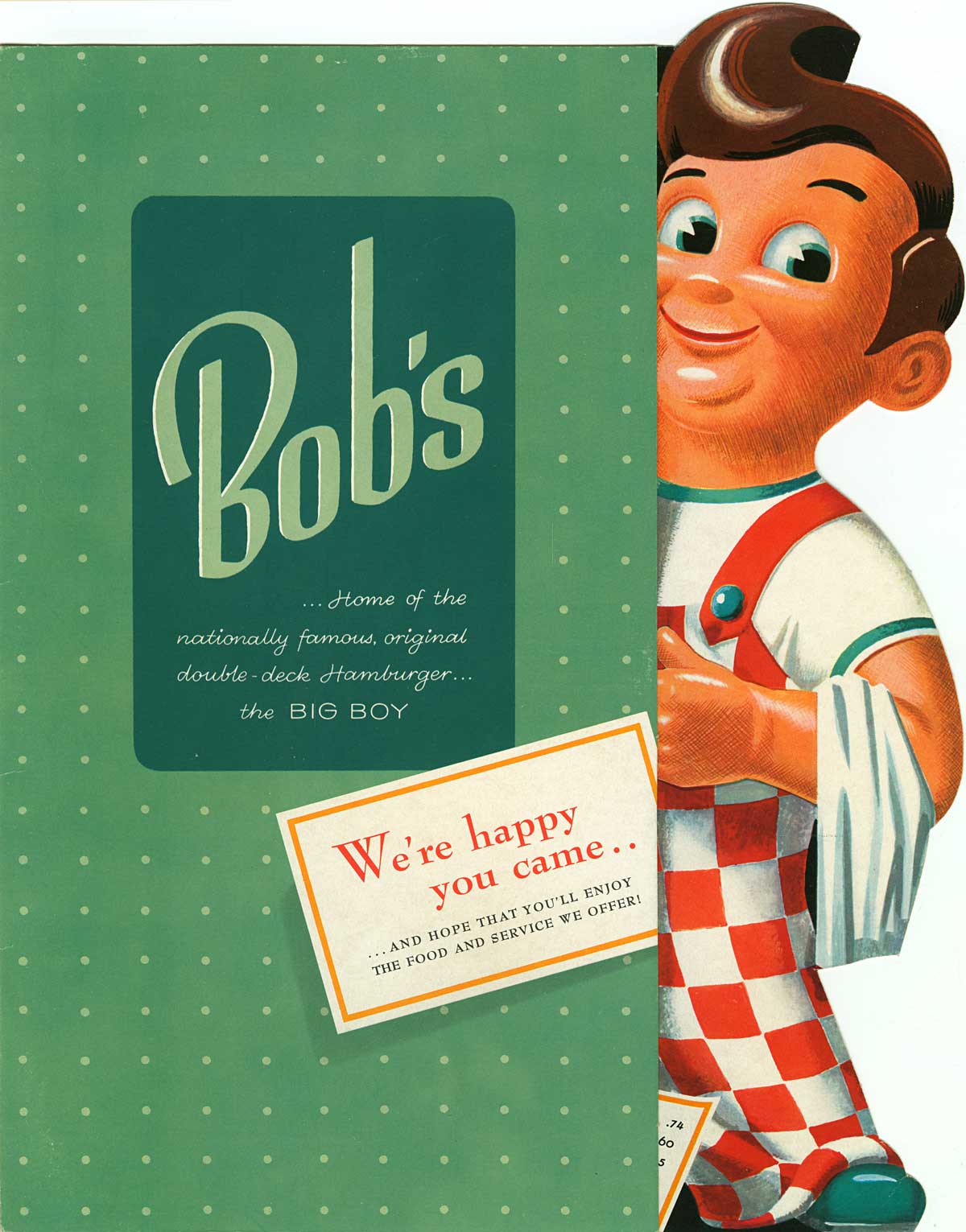
One of America’s most well-known icons, Big Boy, the mascot representing the California-based burger restaurant, could well be considered not only a historical American icon, but a positive representation of boyhood in general. The restaurant was created in 1936 by entrepreneur Bob Wian. He named his first restaurant (Bob’s Big Boy) after his most famous burger, the Big Boy, which used three buns instead of the standard two and two patties instead of just one.
One afternoon, Warner Bros. animator Benny Washam, while having lunch at Bob’s and drawing on a placemat, was approached by Mr. Wian who would ask him to make a caricature of the young Richard Woodruff – a chubby, rosy-cheeked, 6-year-old boy who helped sweep the stand in exchange for a meal. Glenn Woodruff, Richard Woodruff’s brother, tells us how the two boys lived close to the original Bob’s restaurant in Glendale. He also makes note that the original Big Boy burger was his brother Richard’s idea:
“He was a little fat kid, and that’s where they kind of got the idea from… The story is he came in one time and asked for a hamburger with two pieces of meat on it.”
Benny showed Bob the cartoon doodle of Richard and Bob – loving the drawing so much – gave Benny his meal for free in exchange to use the drawing to attract more customers.
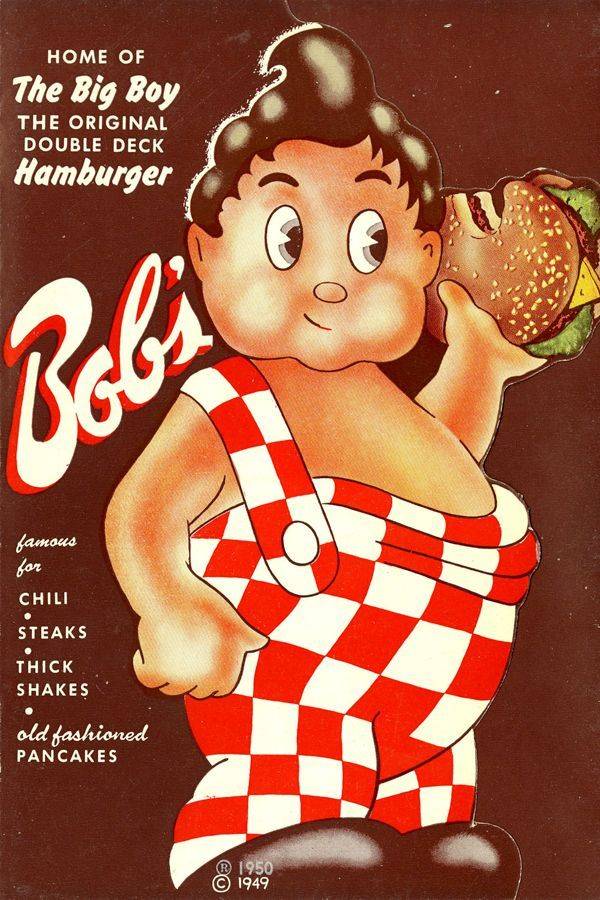
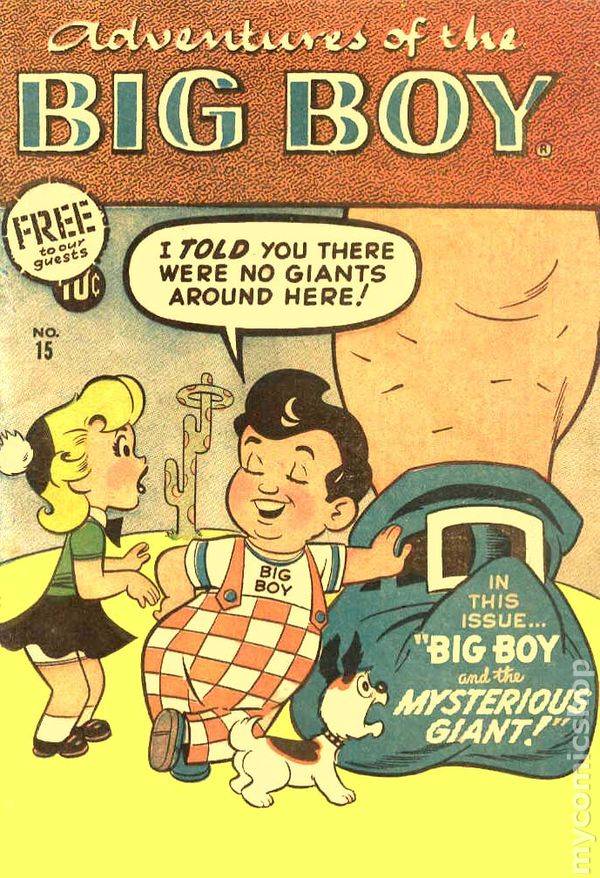
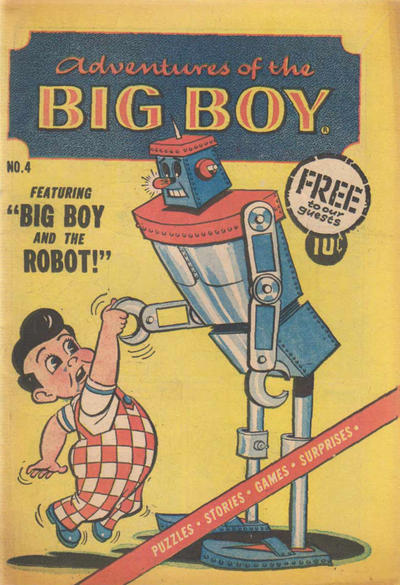
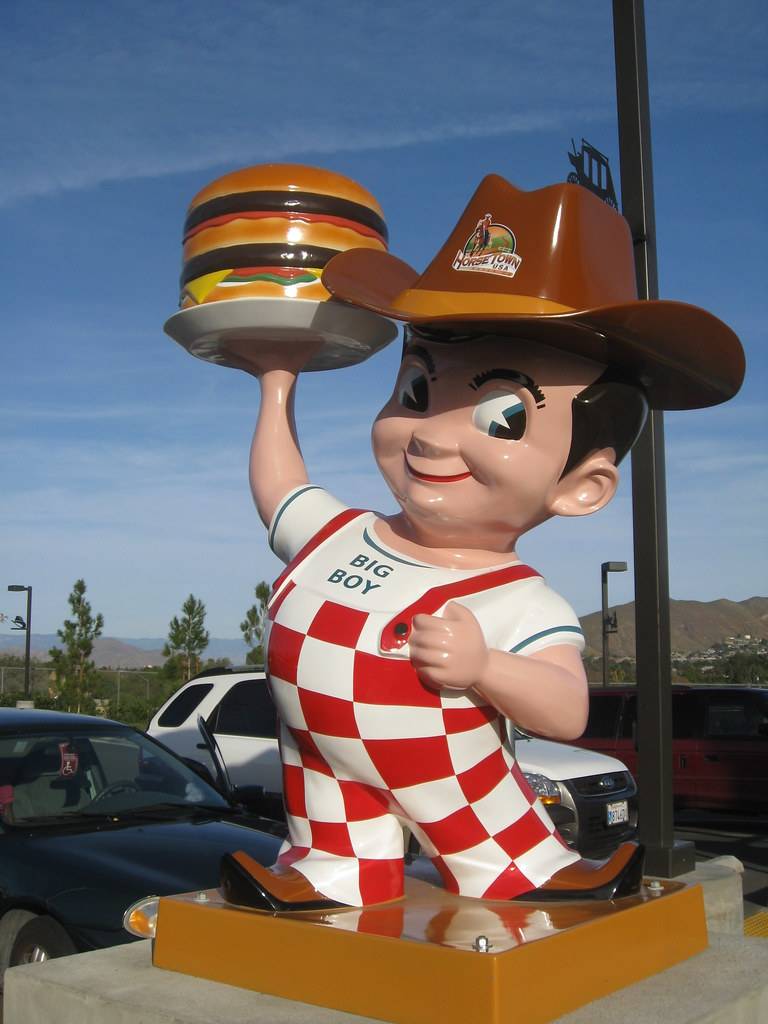
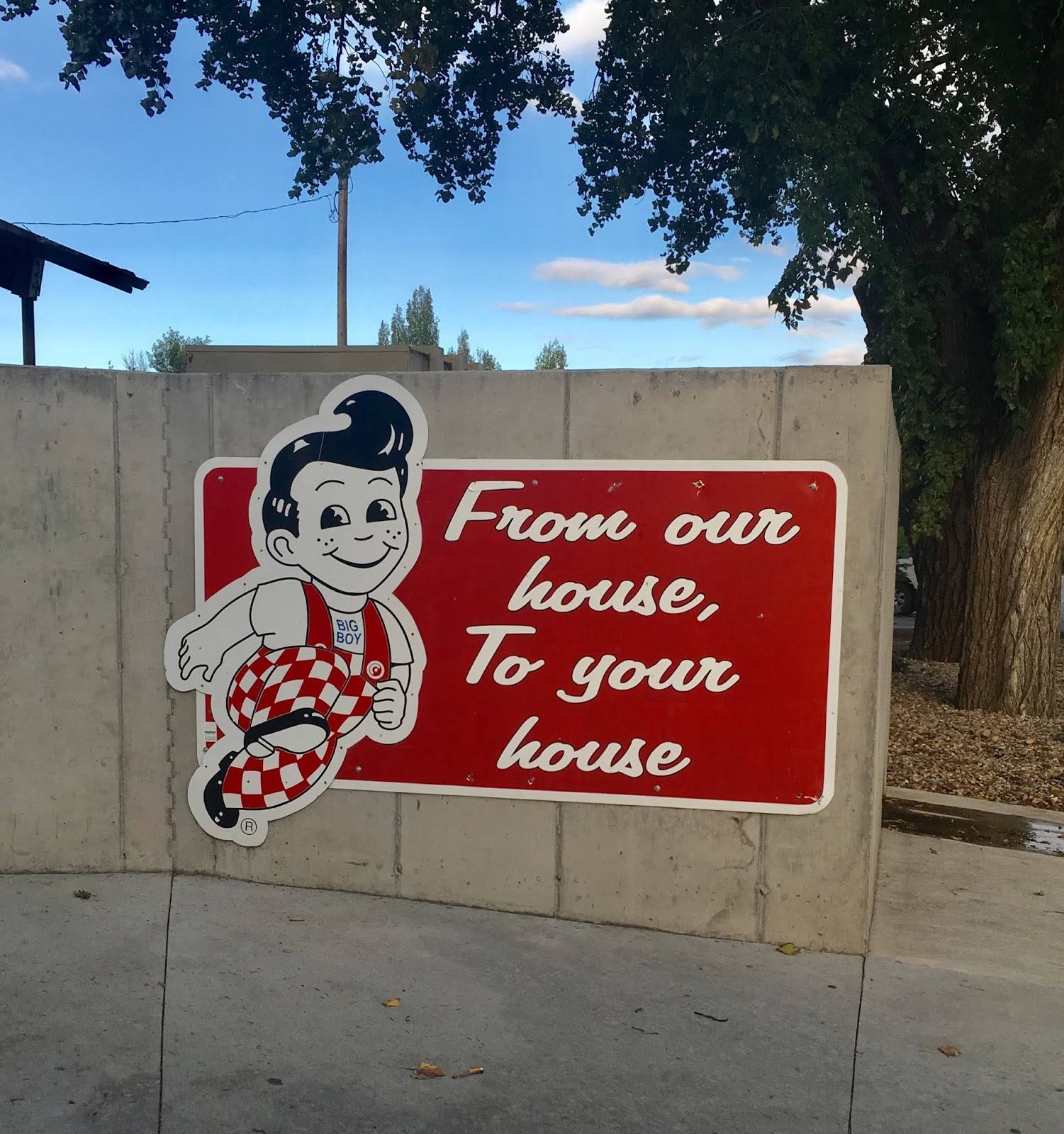
Years later in 1955, Manfred Bernhard, son of graphic designer Lucian Bernhard, would give the chubby Big Boy a new image for the public. Manfred would describe Washam’s original design as “sloppy,” disliking the boy’s “moronic expression.” Bernhard would slim the young boy down, giving him a more plump, cherub-like figure rather than an overweight build. He would also wear a shirt underneath his overalls with the words “Big Boy” centered on his chest, serving the burger in his left hand.
Big Boy Gets Bigger
In the late 1940’s and early 1950’s Bob Wian’s restaurant would begin to expand via franchising. The name Bob’s would be associated with the local chain within California, meanwhile new franchises would adopt the Big Boy name. Frisch’s would become synonymous with Ohio and Kentucky locations, Shoney’s with the Southern United States, and Marc’s in the Upper Midwest. Many more franchises throughout the company’s history would come and go, some becoming independent while others would remain within the Bob’s family of restaurants.
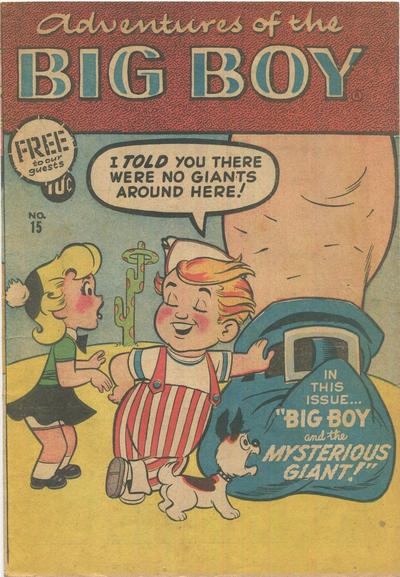
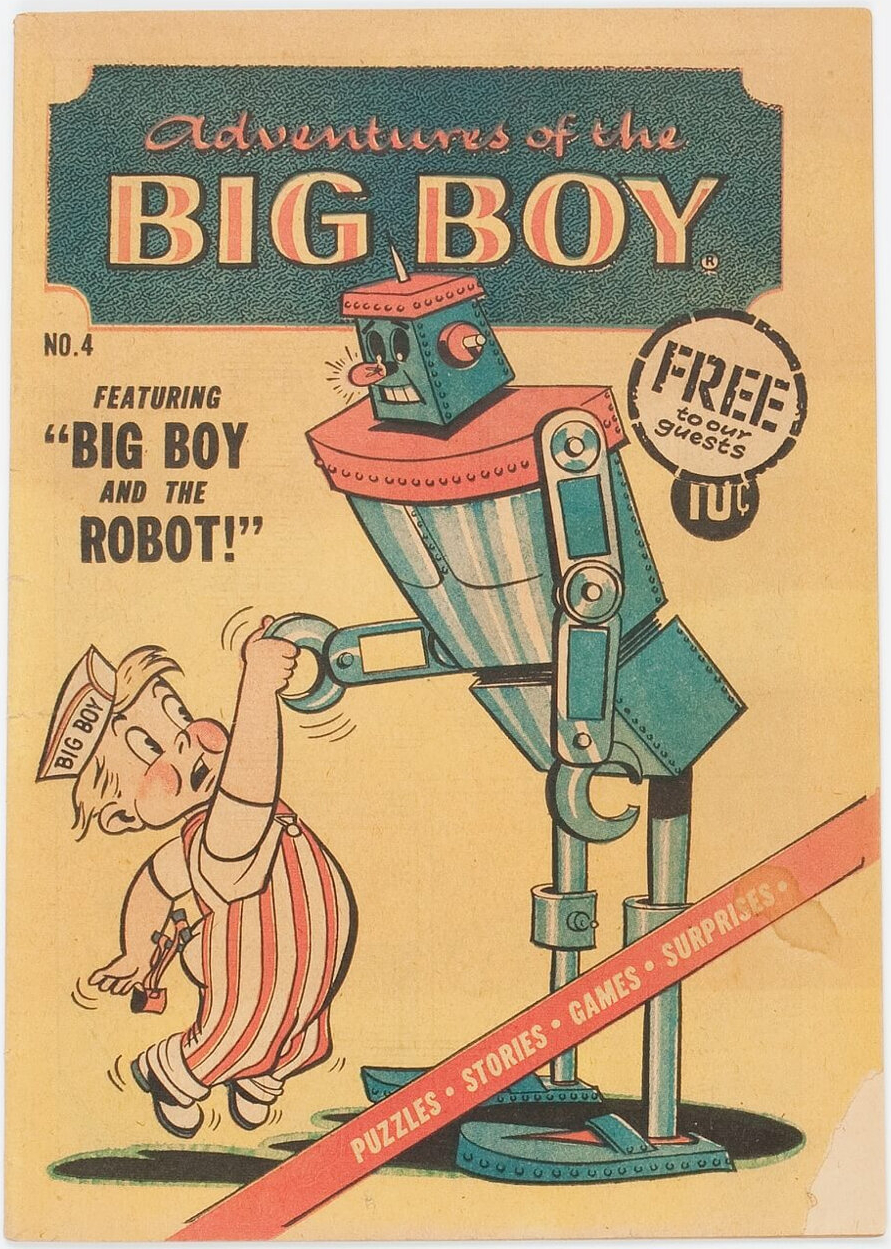
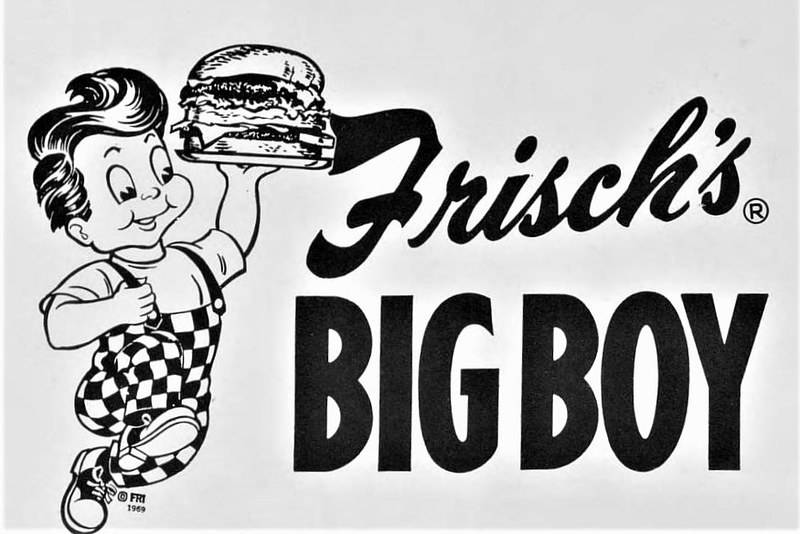
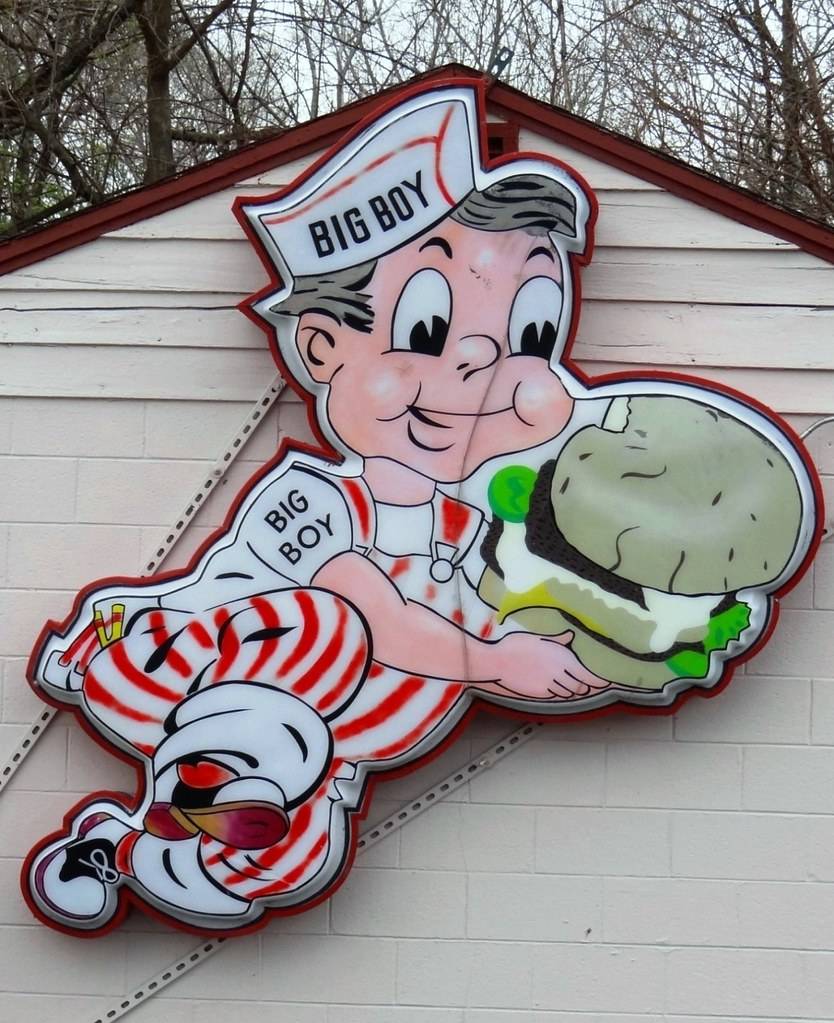
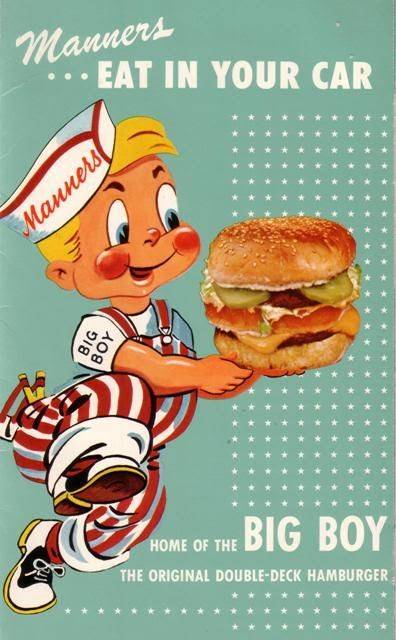
Some of these franchisees, wanting to be distinct but still faithful to the image of Big Boy, would create their own interpretation of the young boy mascot. Frisch’s Big Boy, founded by David Frisch in Cincinnati, Ohio, was Bob Wian’s first franchisee. Entering into an ad hoc arrangement with Wian, Frisch made some changes to his franchise, including the creation of his version of the Big Boy character. The new Frisch’s Big Boy would be even slimmer than Bernhard’s redesign, with his signature Big Boy belly gone – instead, the young boy's somewhat-stocky physique would be characterized by his thick arms and legs, though he would share the same rounded hips that his West Coast “older brother” carried. Instead of wearing checkered red-and-white overalls, his overalls would be striped. His hair would be cut to be much shorter and his hair color would change to be either blonde or red. Finally, he would be given a hat with the name “Frisch’s” on it. Colloquially, this Big Boy would later become known as the “East Coast Big Boy.”
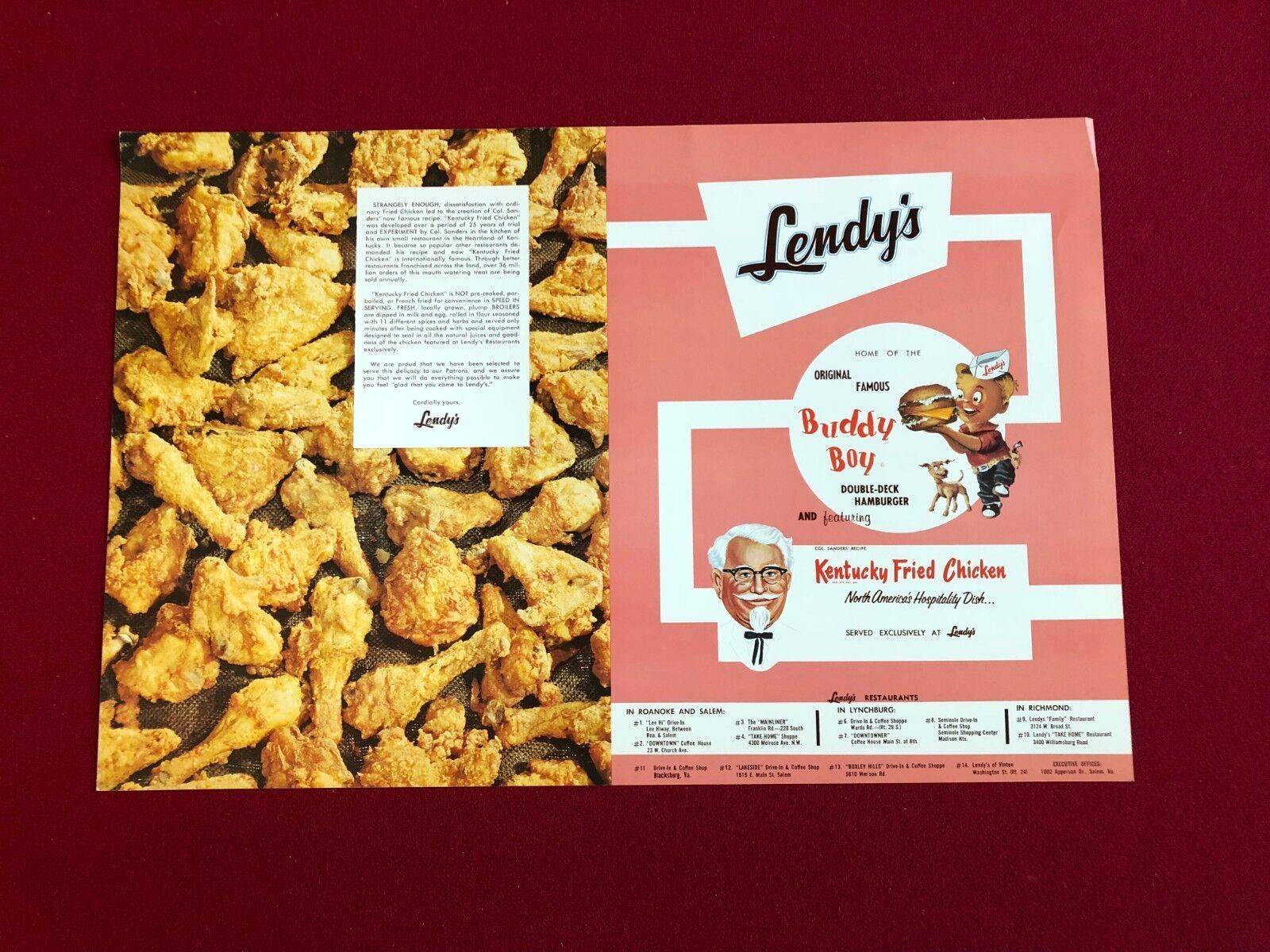
Lendy’s Big Boy of Virginia saw a new boy for the renamed Big Boy burger, the “Buddy Boy.” He was originally drawn by Leonard Goldstein’s brother, Louis. Similar to Frisch’s Big Boy, Lendy’s boy was given a complete makeover – a short, blonde haircut identical to the Frisch’s boy, a pink shirt, blue jeans, tennis shoes, a belt with a toy gun, and a dog companion.
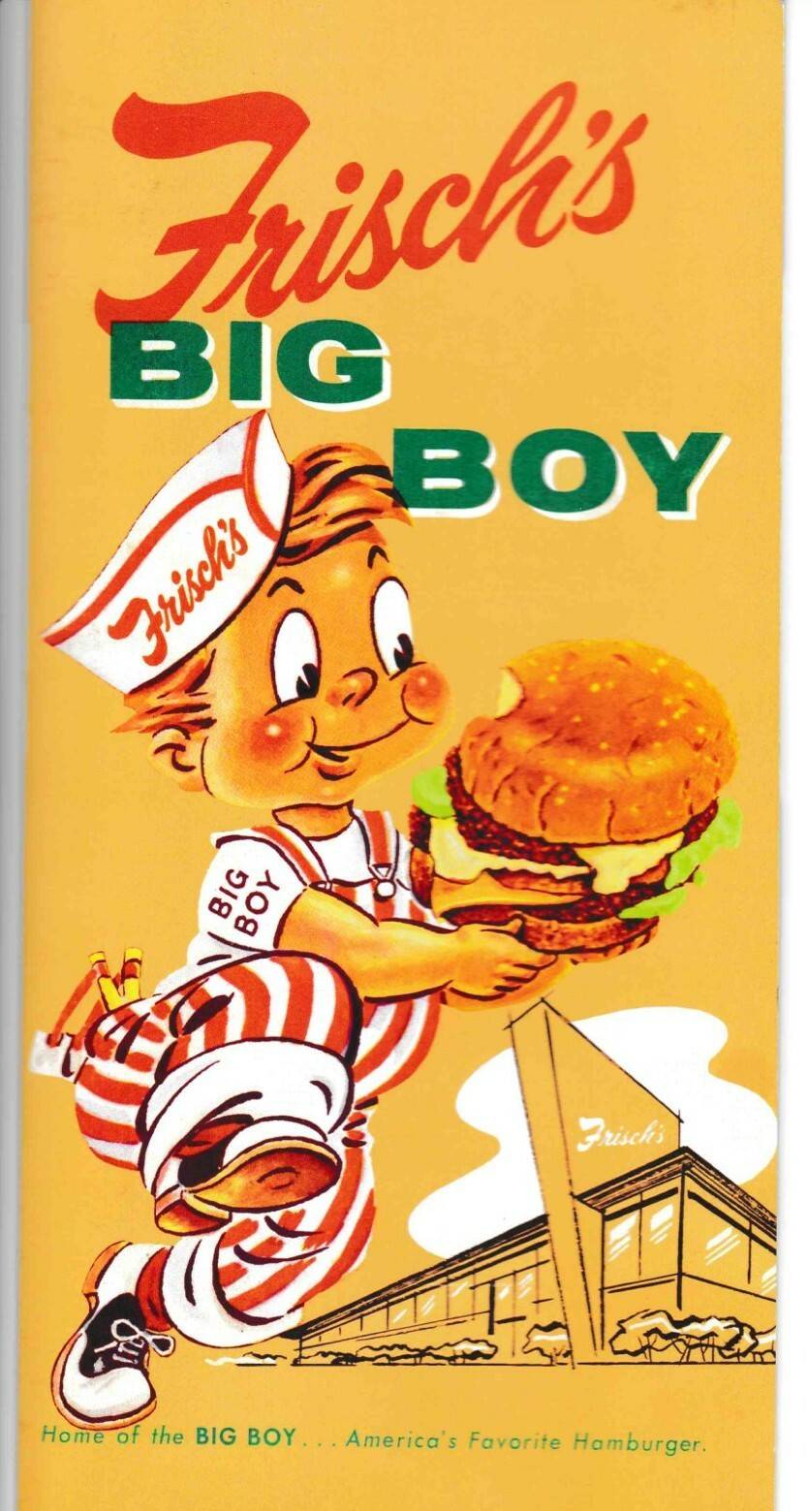
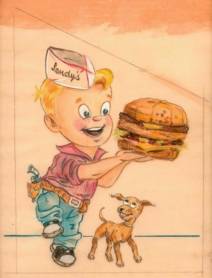
Manfred Bernhard's design for Frisch's (left), Louis Goldstein's design for Lendy's (right)
Big Boy In Comics
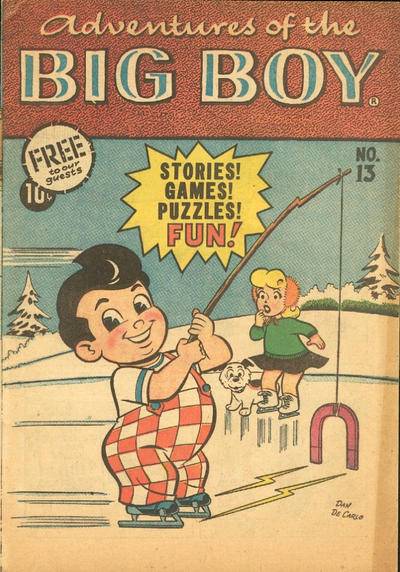
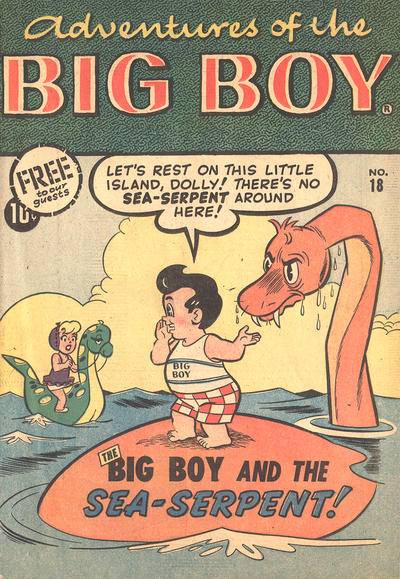
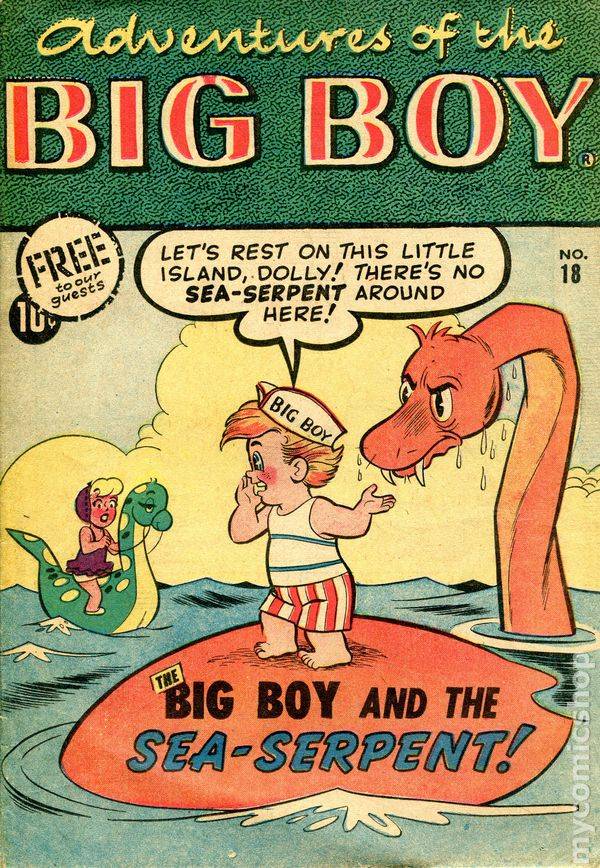
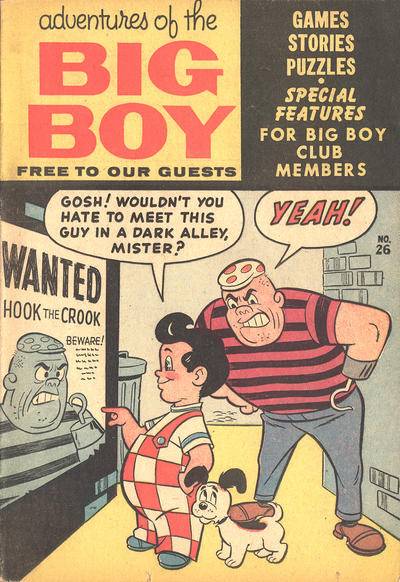
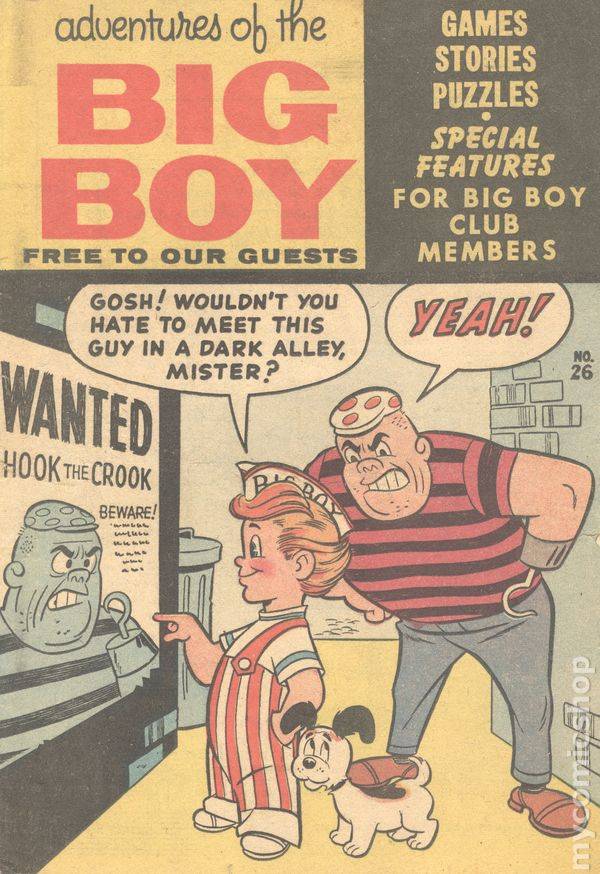
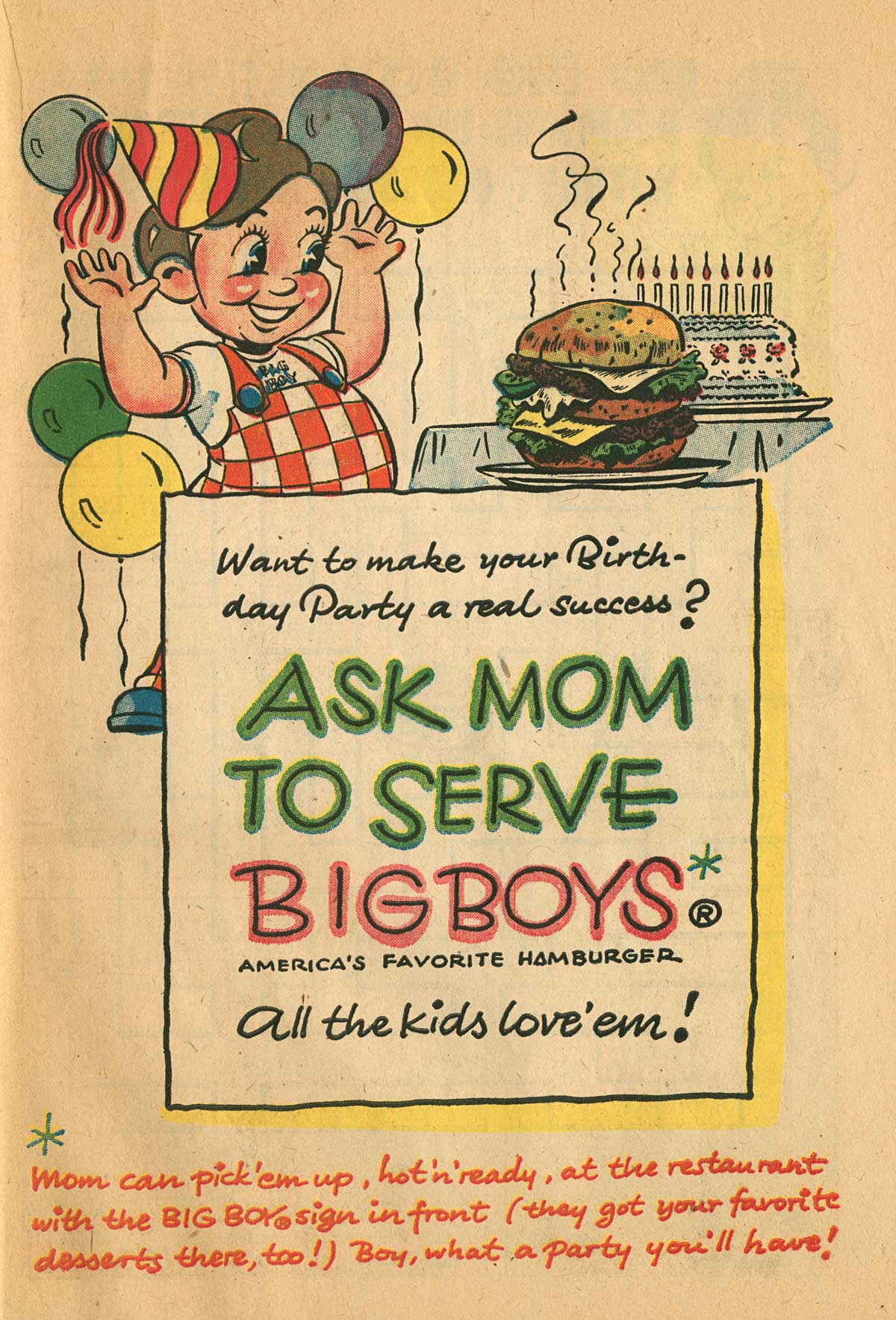
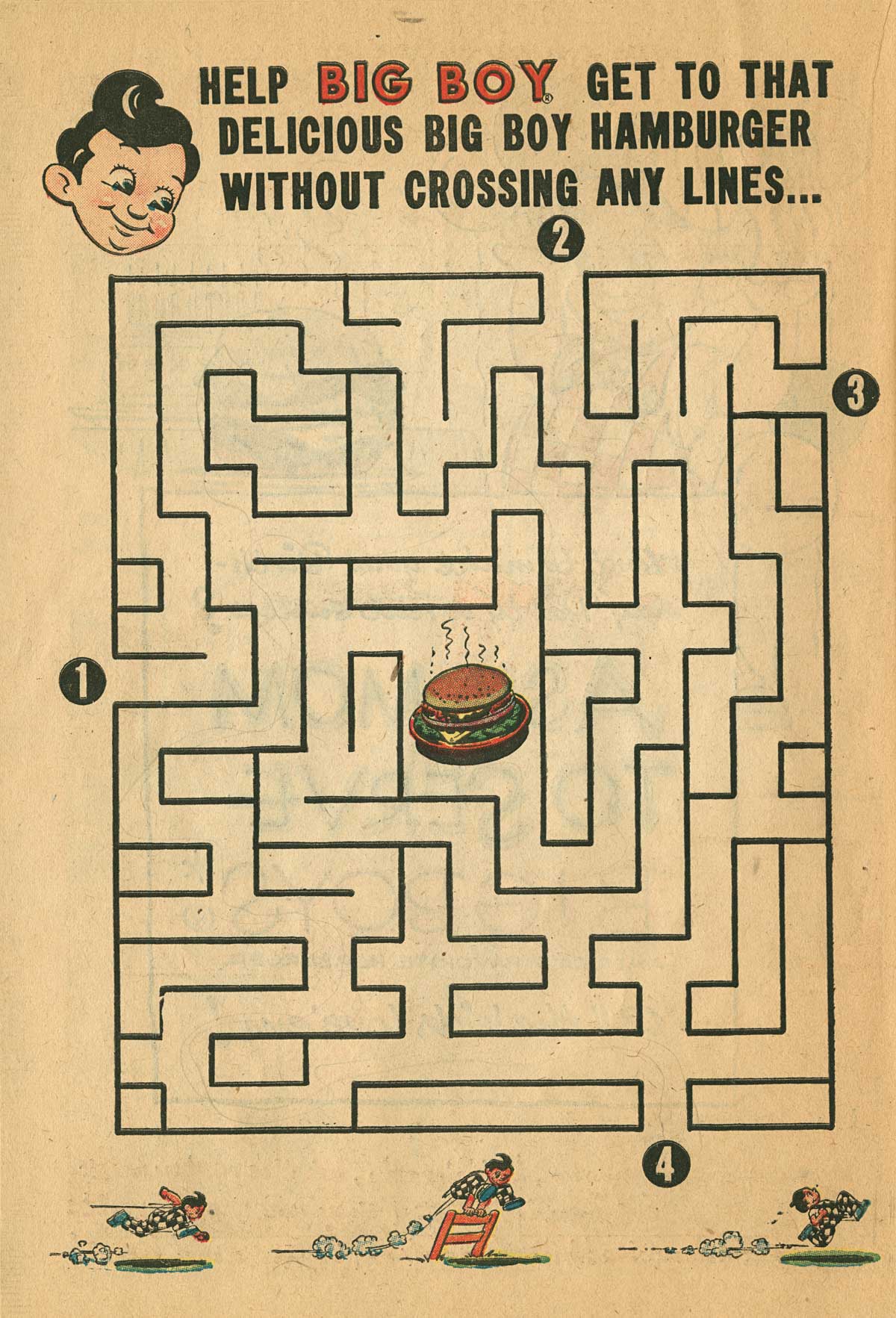
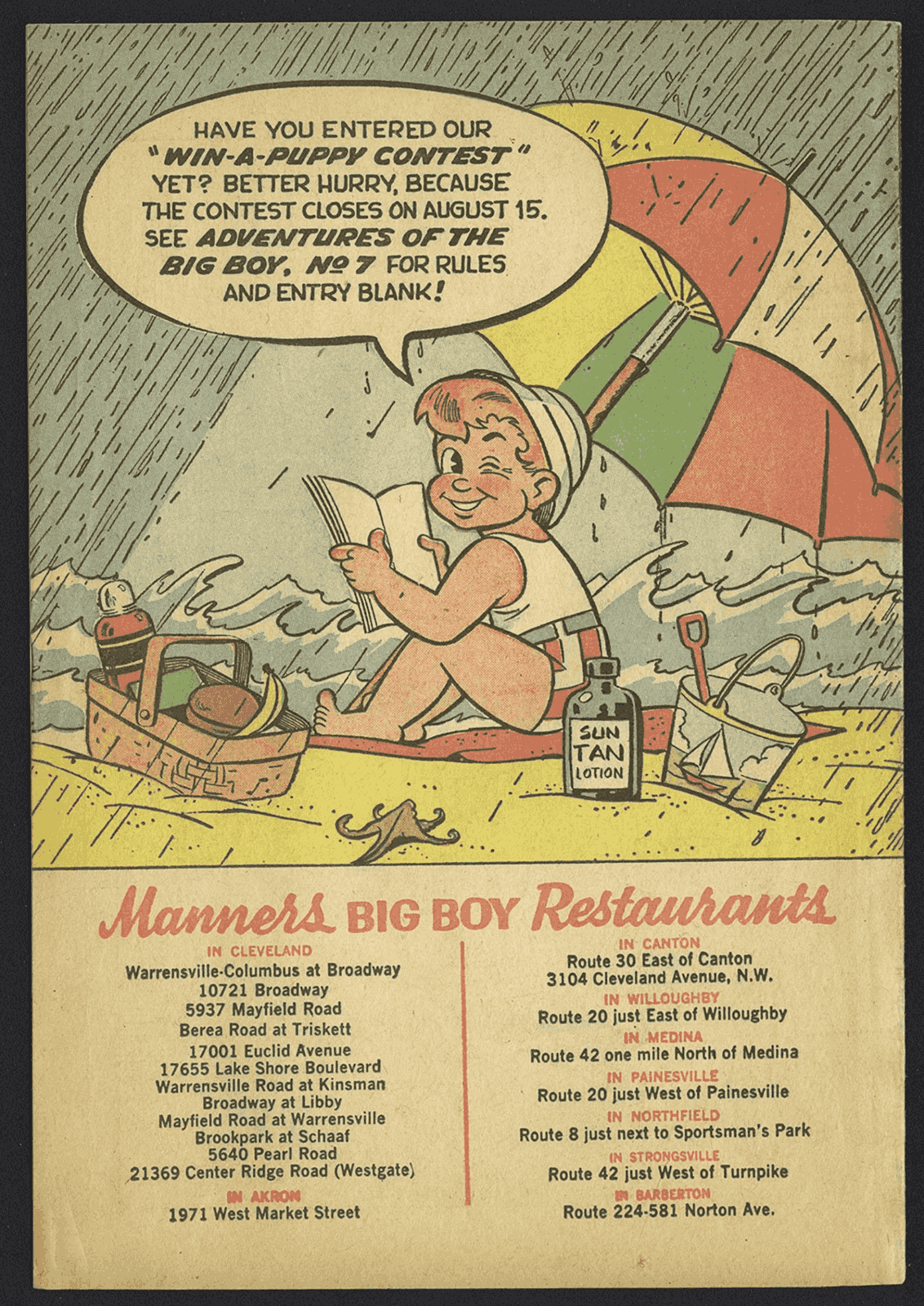
In 1956, Big Boy would get his own comic produced by Timely Comics (now Marvel Comics). The comics were given to children to entertain them before their meals arrived.
“They wanted something to bring families with children to their restaurants on a regular basis… The wholesome, non-violent mix of stories, games, puzzles, pen pals and letters have all contributed to the acceptance of ‘Adventure of Big Boy.’” Manfred Bernhard told The Sun in an interview in 1980.
The comics were written and drawn by Stan Lee and Bill Everett, with Solomon “Sol” Brodsky serving as production manager. The comic would become one of the largest success stories to date, with an estimated 2-3 million being distributed to Big Boy restaurants each month. The Adventures of Big Boy was produced during the height of the Comics Code Authority (CCA) in the 1950s, which set strict limitations on what was and was not allowed in comics. However, Big Boy’s cute appearance and feel-good stories with a positive moral at the end served as a good contrast to the usual newspaper-stand comic, making it an attractive option for prudent parents.
Production manager, Sol Brodsky, had his Adventures of Big Boy comic described as “One of the most successful… promotion comics.” David John Zimmerman, who wrote about the comic’s success in Marvel Age #22 in 1985 continues:
“Sol put together a successful series of comic book giveaways for them, involving himself in every aspect of production - from the art to the packaging, even doing the writing on occasion. The scripting chores, for the most part, were handled by Stan Lee, who had long since become a close friend as well. On occasion Sol would ask Mike Esposito to help him on the inking.”
“Sol loved doing Big Boy,” Selma (Sol Brodsky's wife) said. “It was simple, it was fun and it was cute. He had a statue of Big Boy that sat on his desk that I'd see every morning when I got up.” “That was a big part of our life,” Janice (Sol's daughter, Janice Cohen, who would go on to become a colorist), said. “When we took our trip out to California, the big event was to actually go in and eat a Big Boy hamburger!”
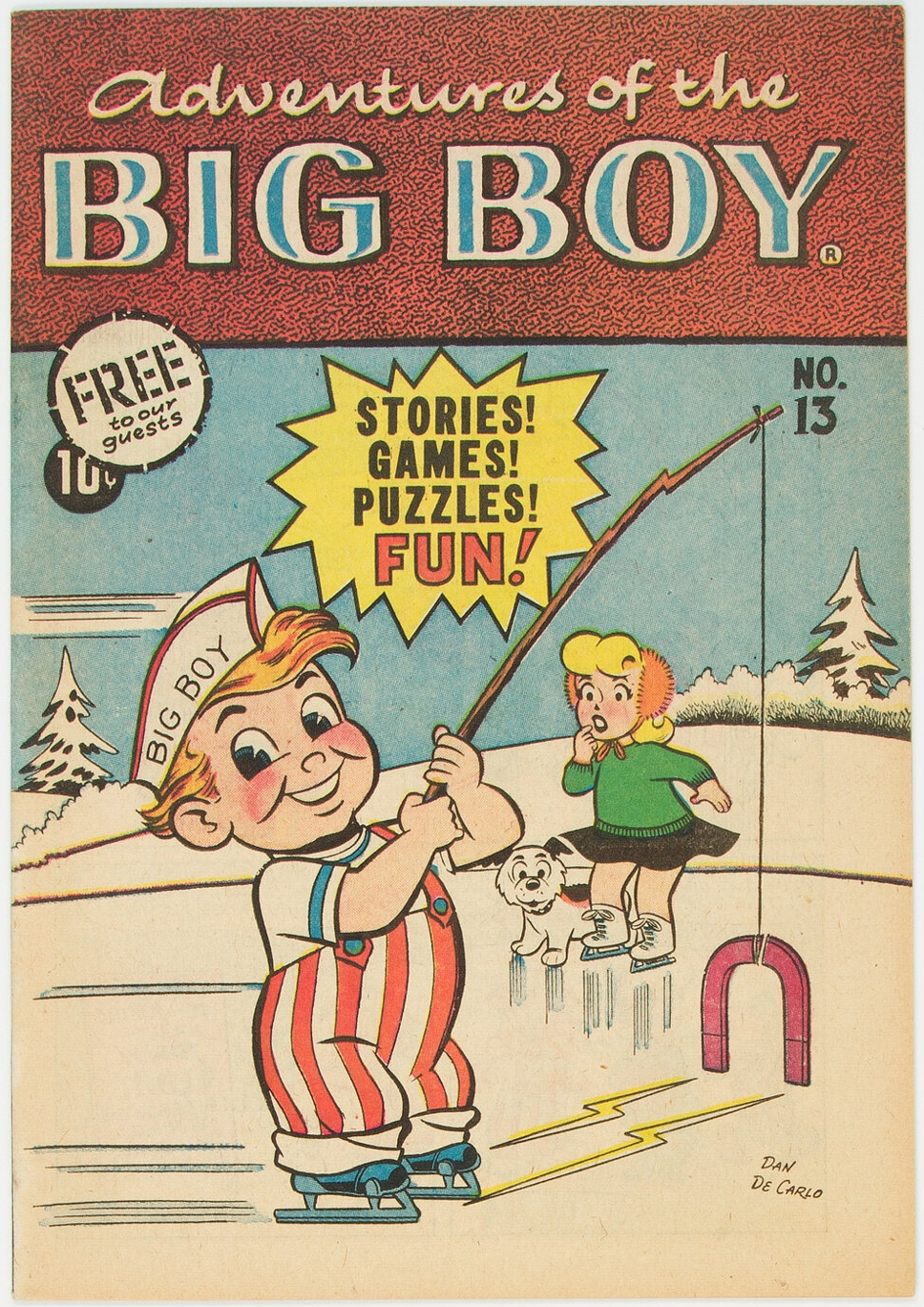
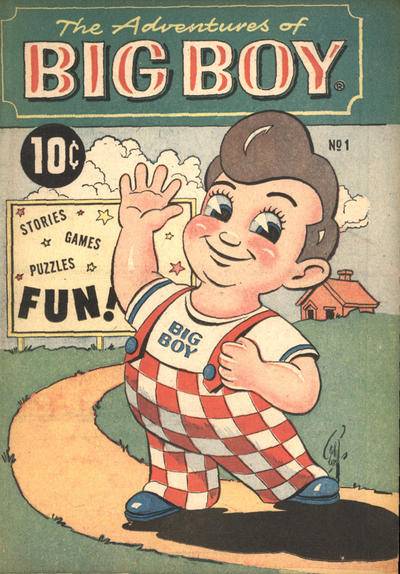
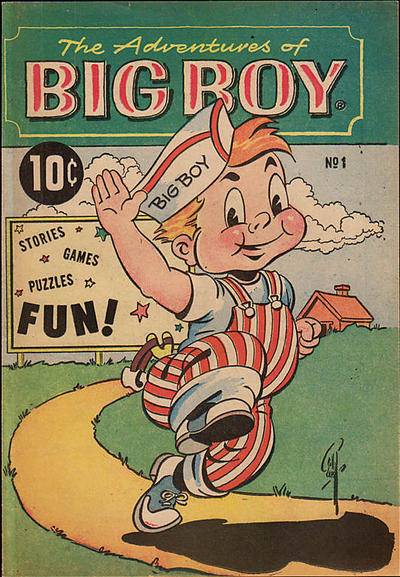
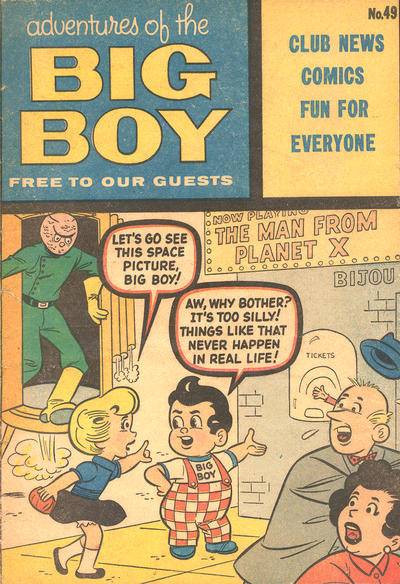
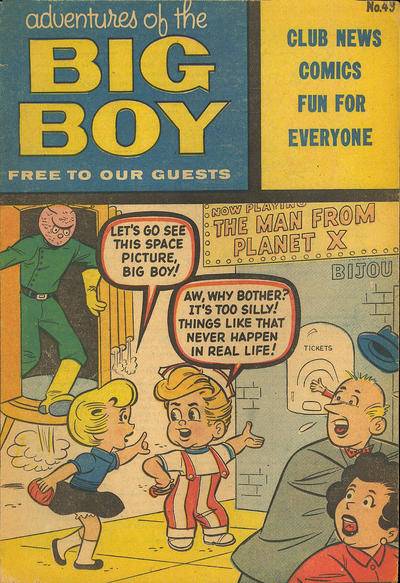
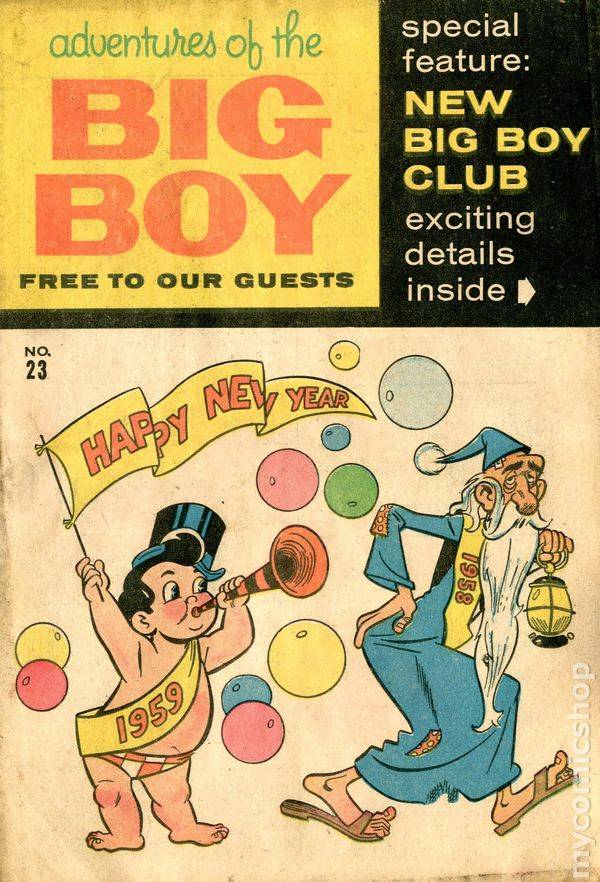
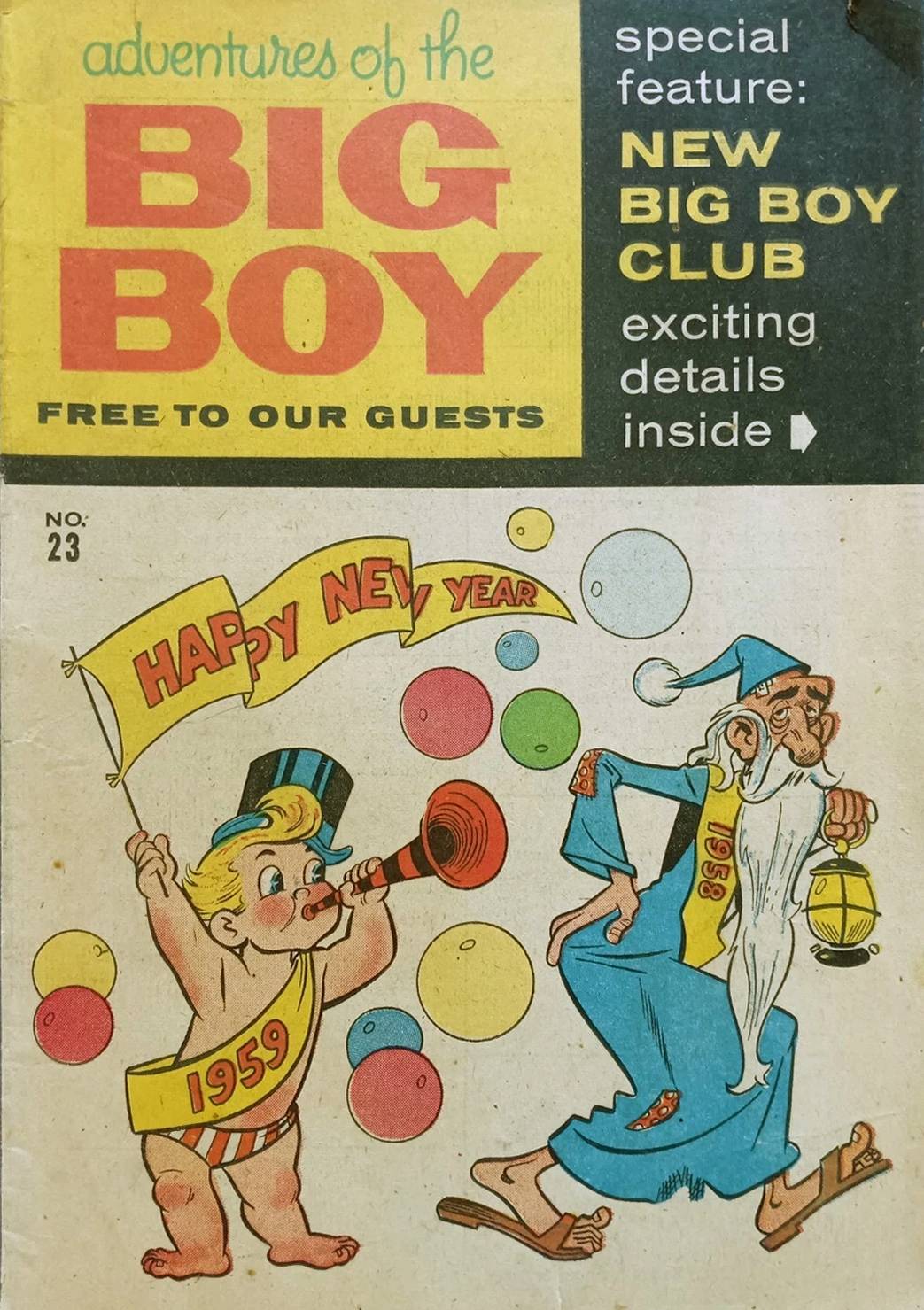
What you’ll notice from these images is that both the “West Coast” and the “East Coast” Big Boy designs were used for the different comics that would be shipped to their respective regions. As noted earlier, the original Big Boy is much chubbier, with a taut, full belly and thick arms and thighs to match. However, earlier drawings of our blonde, shorter-haired East Coast Big Boy show him having a much similar build to his West Coast brother. That said, his chubby physique only enhances his cute appeal – with artists using a single “c-curve” to define the gesture of his entire torso, contrasting rhythms for his limbs, and simple shapes for his eyes, cheeks, and button nose. Compare these design elements with Kim Casali’s duo for Love Is… or Chuck Jones’ version of Porky Pig.
The Adventures of Big Boy comic would span an almost 40 year legacy, finishing its run in 1996. Different artists would take over after Stan Lee’s and Bill Everett’s initial work on the first twelve issues. Karl Brodsky, Sol Brodsky’s brother, would take over as production manager after issue #13. Other artists that worked on the series include DC artist Manny Stallman who worked on the comic throughout the 70s, and Bob Bindig who took over from 1985 to 1995. After the comic’s dissolution, a magazine, Big Boy Magazine, produced by Yoe! Studio would replace the long-lasting comic, though the magazine did not last long and was later cancelled.
Big Boy's Future
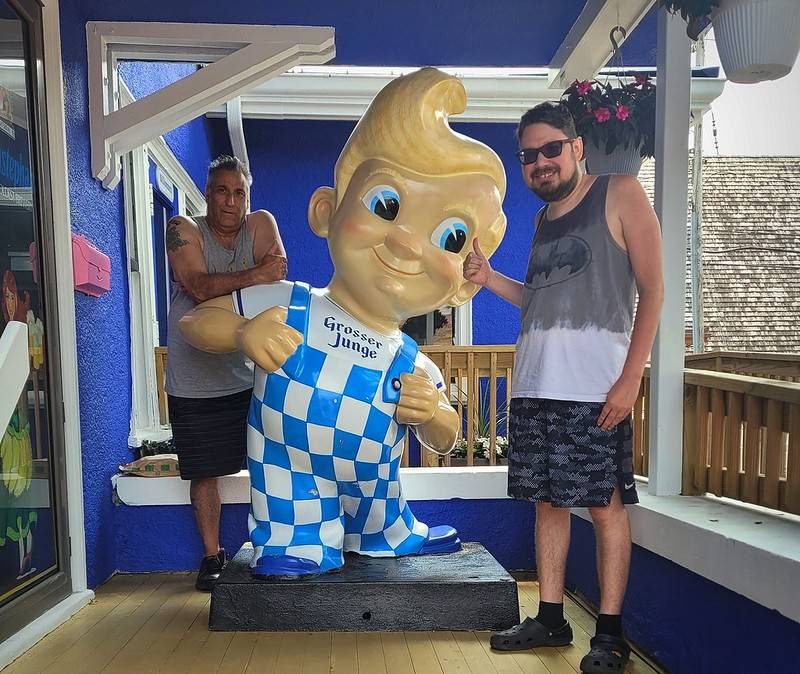
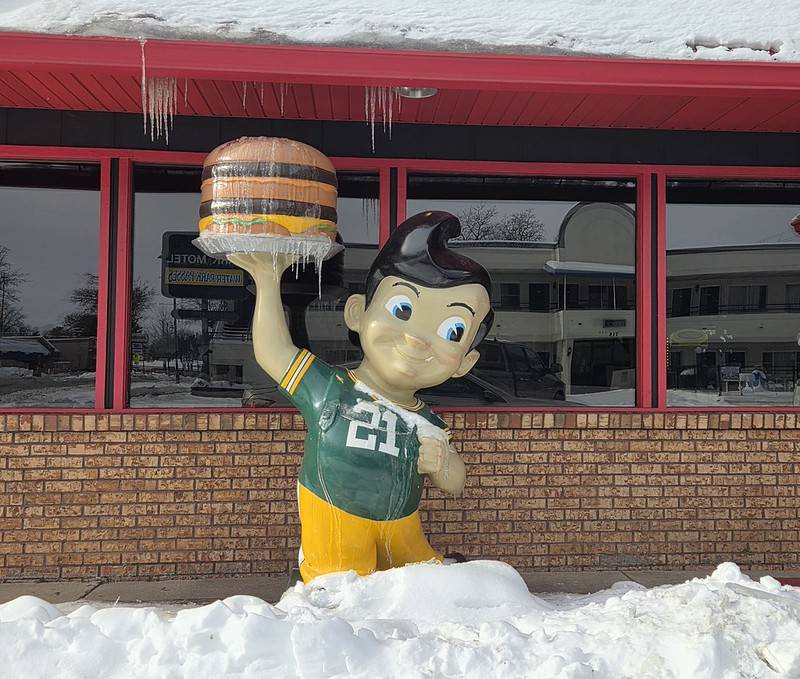
Big Boy’s future remains to be seen, as his image and likeness are closely tied to the restaurant chain and the health of the company. What initially started as a burger stand in California is now known as Big Boy’s Restaurants International, LLC. The chubby-cheeked boy can be found in places such as Germany and Japan, still with the same old-fashioned pompadour and outfit. However, multiple Frisch’s, Dolly’s, and Big Boy’s, have seen closures due to legal disputes and financial pressure. What this means for the boy himself and where he will go remains to be seen. Regardless, many still will continue to see him as a historical footnote in American iconography.
—
You can read the BrokenChains blog where every November is Big Boy month, documenting the current state of the company, its food, service, and where it will go.
Sources: