The Other Jungle Boys
This article is a work in progress!
With the popularity of Rudyard Kipling’s The Jungle Book and Edgar Rice Burrough’s Tarzan came numerous copy-cat, parody, and tribute characters along the way. Some of these characters strayed far away from the original source material, taking on completely new identities based on different mythos and cultures, while others wore their influence on their sleeve.
Bomba the Jungle Boy
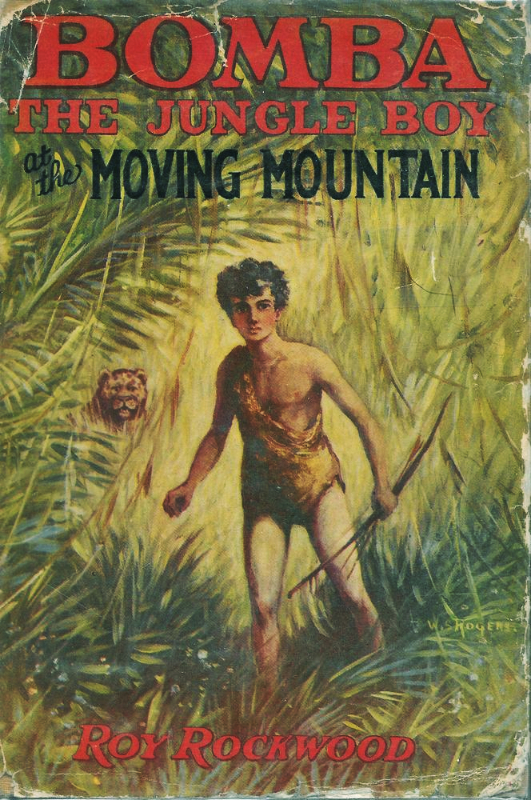
Bomba the Jungle Boy, created by Roy Rockwood, is a popular jungle boy with 20 novels to his name. 12 films were produced by Monogram Pictures with Johnny Sheffield playing Bomba. DC Comics would also run a short-lived series loosely based on the books written by Denny O'Neil. The first 10 books take place in South America where Bomba, raised in Amazonia, is on a quest to find his long-lost parents. After finding his parents, Bomba goes on adventures in Africa where he meets his best friend Gibo.
Ken The Wolf Boy
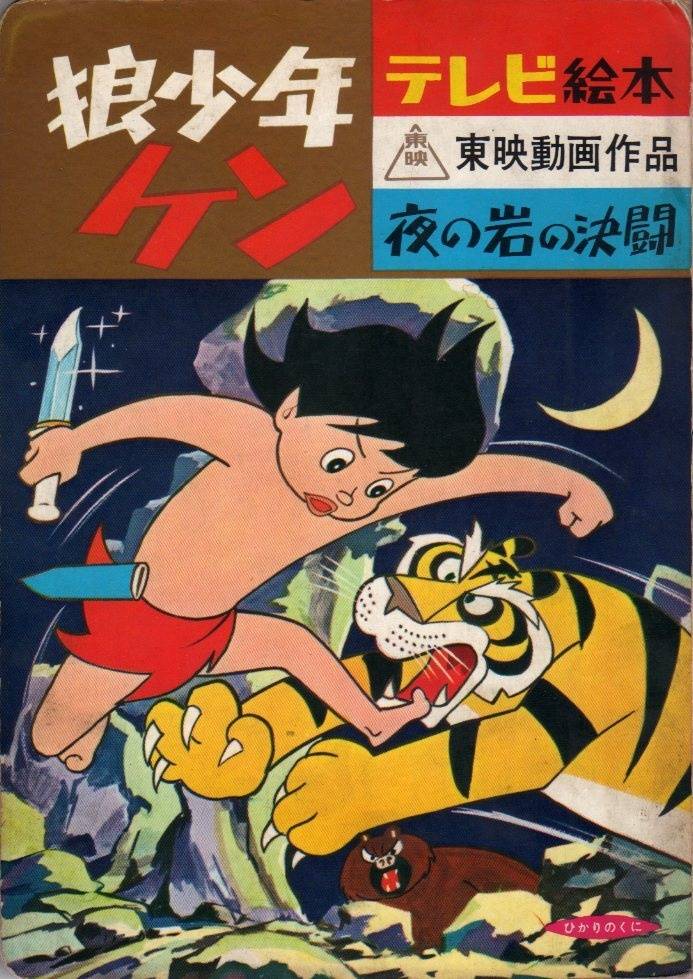
After Toei’s success with their hit anime Astro Boy, they would release their own jungle boy anime less than a year later titled Ookami Shonen Ken (Ken the Wolf Boy). Like Mowgli, Ken is an orphan raised by wolves in the Himalayan mountains with no parents or human relatives to speak of. His animal companions consist of twin wolves Chicchi and Poppo. The series would last 86 episodes, however unlike Toei’s predecessor, it would not receive the same critical acclaim that Astro Boy did.
Shonen Kenya ("Kenya Boy")
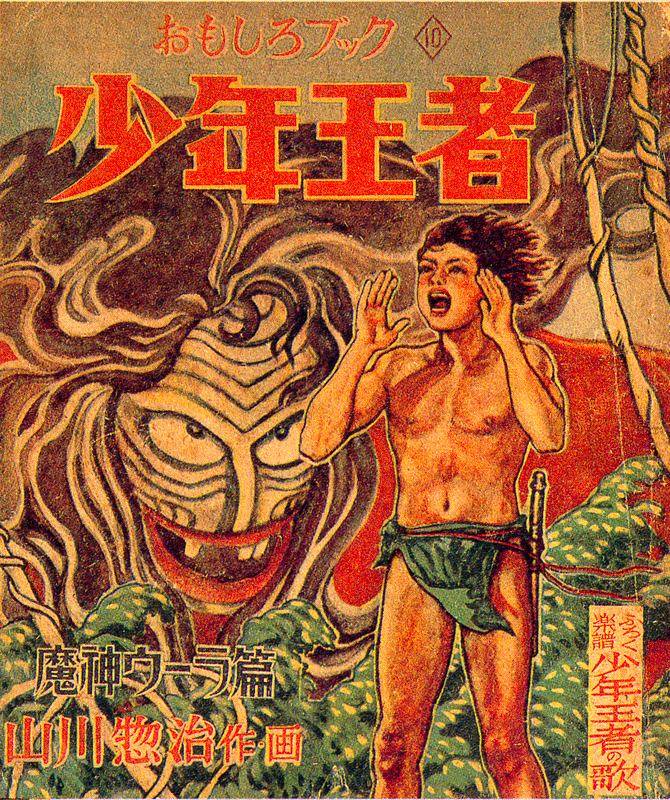
Written by Soji Yamakawa and originally published by Shonen Oja (Shounen King) in 1949, “Shonen Kenya” or “Kenya Boy” follows young Murakami Wataru who – while living with his family in British Kenya – finds himself separated when war breaks out between the Axis and Allies, resulting in him having to survive the foreign wilderness on his own. The series of picture novels (emonogatari) would later receive a tv and film adaptation. The live-action TV series was made in 1961 by Toei and starred Yamakawa Wataru as the titular character. The anime film would later be produced in 1984 by Toei and Kadokawa with Nobuhiko Obayashi as director.
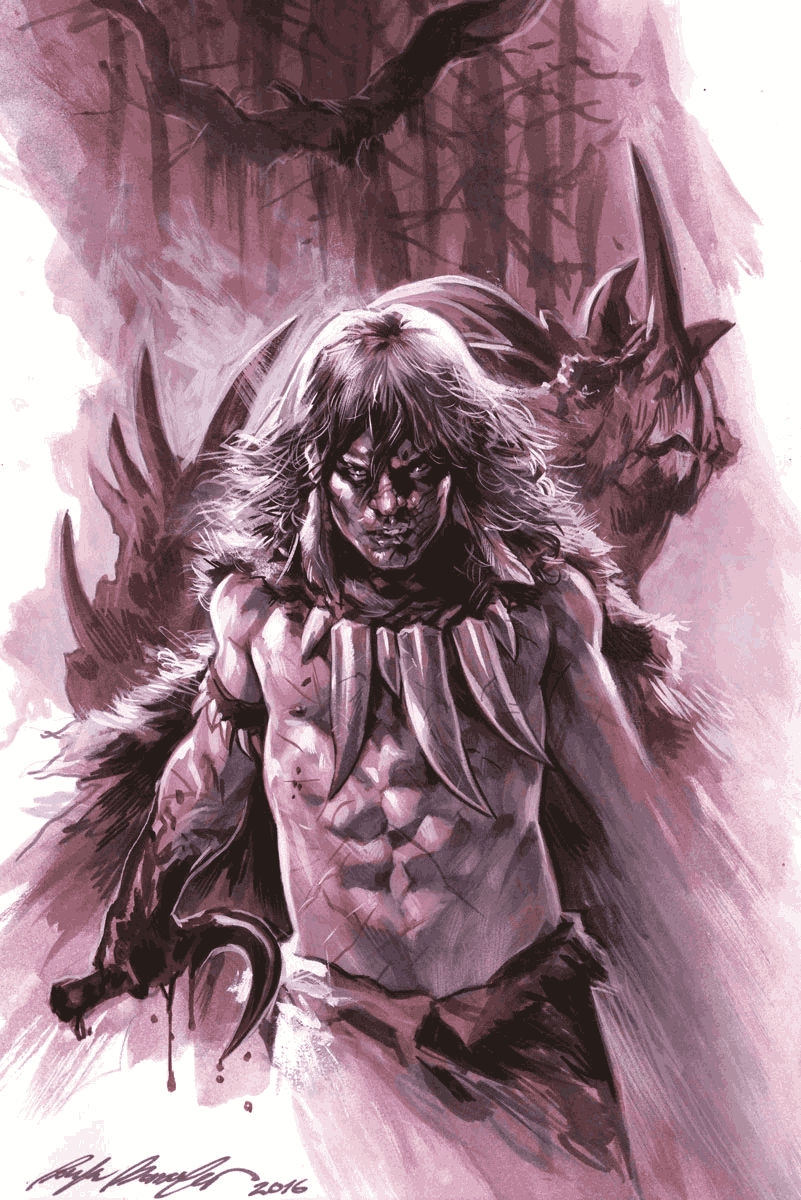
Savage
A much darker, graphic twist on the jungle boy archetype, Savage follows 15-year-old Kevin who lives on a remote island with his mother, who teaches him how to survive in the wild. Things take a turn for the worse when he witnesses her sudden murder by an unknown group of men. Promising revenge, the boy hones his survival instincts and skills, hunting prehistoric dinosaurs and other creatures that get in his way. The story is written by B. Clay Moore with art done by artists Clayton Henry and Lewis LaRosa. Savage is currently being published through Valiant Comics.
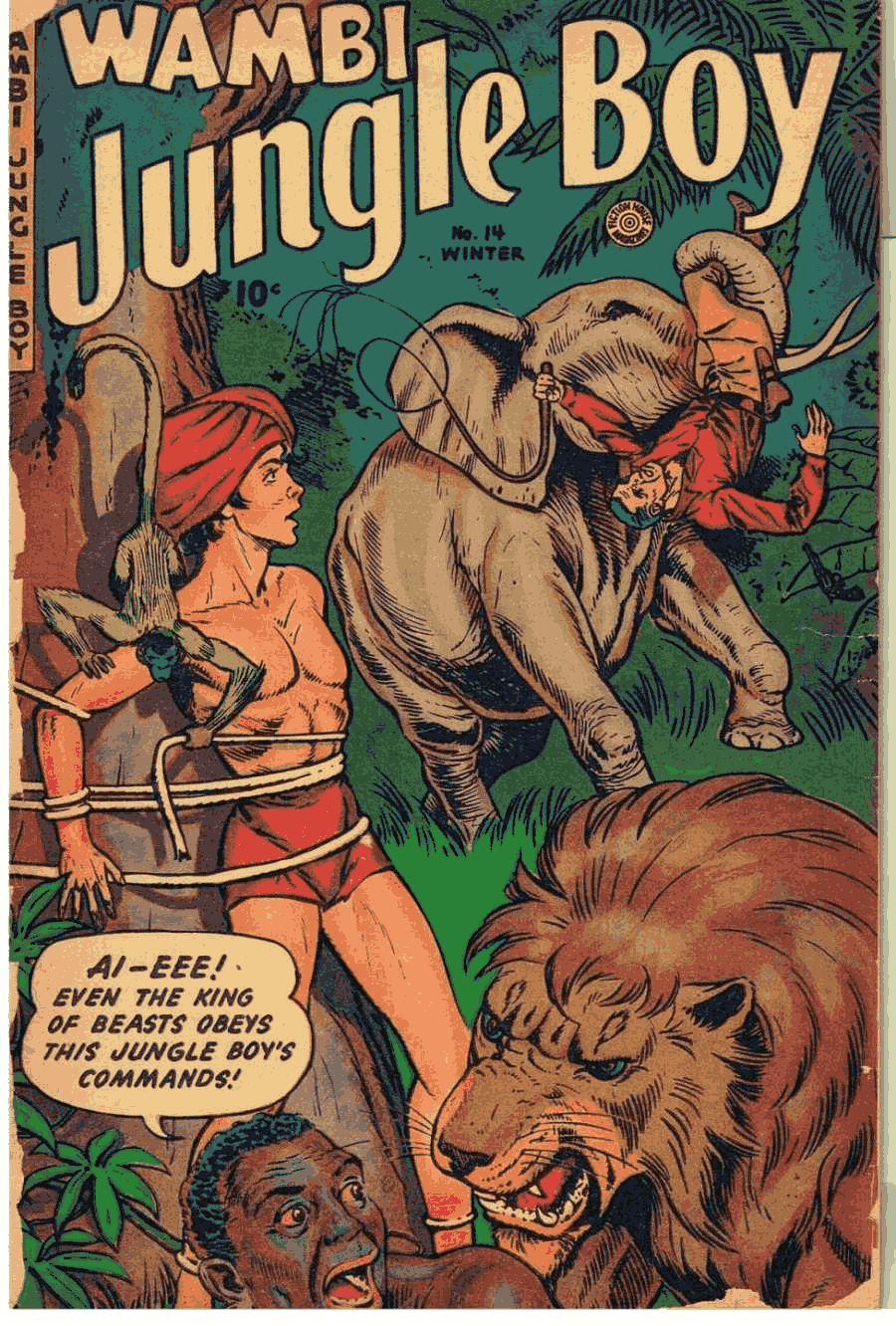
Wambi The Jungle Boy
The first child character to be presented in Jungle Comics #1 (originally published by Fiction House Magazine), Wambi the Jungle Boy was created by an unknown writer along with artist Henry Kiefer (known for his work in Classics Illustrated). Wambi has no origin story and very few details regarding his past. Much like Mowgli, he is able to communicate with his animal companions – in particular, an elephant named Tawn. Wambi would appear both in Jungle Comics and in his own title for 18 issues before his last appearance in Jungle Comics #158 of Spring 1953.
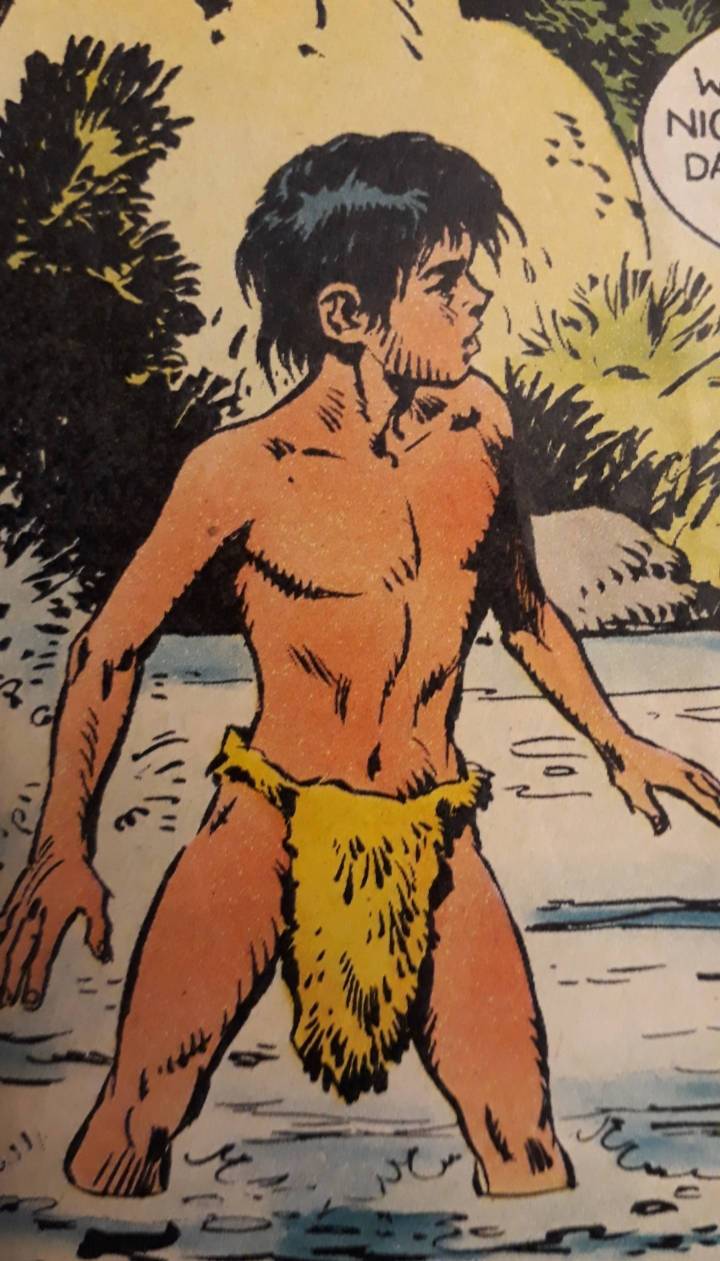
Wangaroo The Jungle Child
A collaboration between French screenwriter Roger Lécureux and Spanish illustrator Juan Arranz, Wangaroo the Jungle Child tells the story of a lone boy raised by monkeys in the jungle of Borneo. We’re told that his parents were researchers who died in an accident when he was a very small child, thus explaining his origin story. The comic was originally published in the German youth magazine Yps, which lasted from 1975 – 2000 publishing over 1,000 issues.
Yug
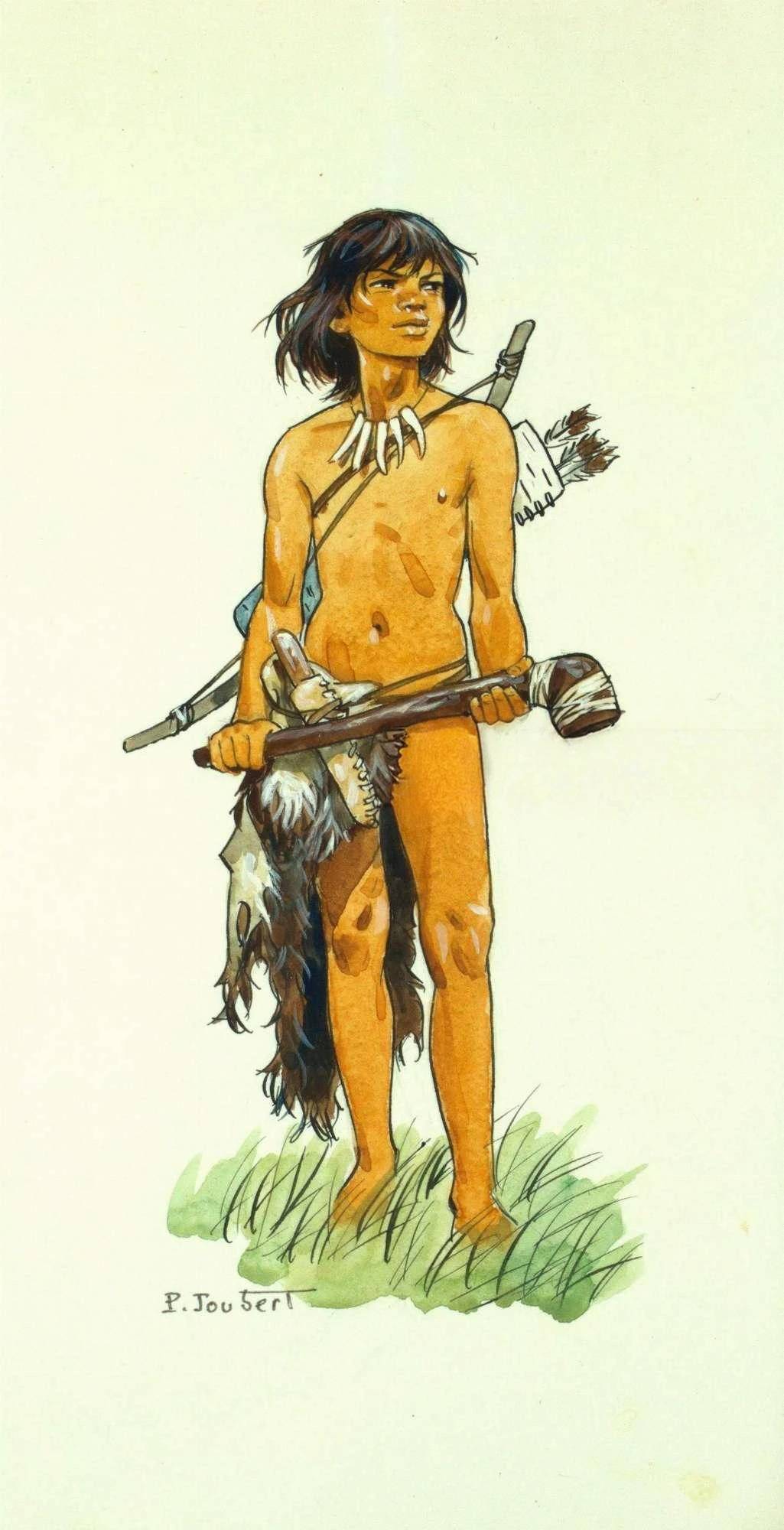
Written by Guy de Larigaudie and published in the French Scout magazine in 1933, Yug (an anagram of the author's first name) takes the jungle boy character from the typical dense rainforests and places him in the even more dangerous, more exotic, prehistoric past. With illustrations done by Pierre Joubert, the book focuses on the exciting adventures of the young boy as he uses his skills to survive the wilderness - making friends along the way. A film was allegedly in the works in 1935, with surviving watercolor art made for the film by Joubert confirming potential pre-production, but otherwise no film has been made.