Castor and Pollux
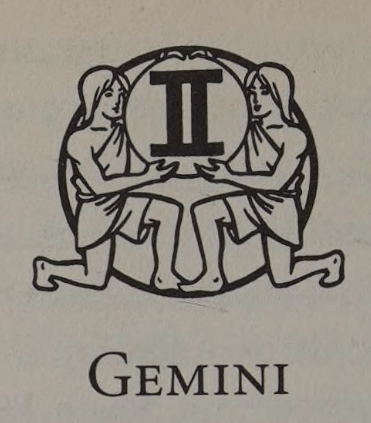
The Gemini Constellation
Before the modern approach to astronomy, before Galileo, before the invention of the telescope, there were stories. The Gemini constellation, meaning “the twins” in Latin, are Castor and Pollux. Much like Hercules and Iphicles, the two boys are technically half-siblings, this time sharing the same mother but having different fathers.
The most popular version of the twins’ origin comes from the narrative of Leda being seduced by a swan. Leda, who was also married to King Tyndareus, slept with the swan (who was really the god Zeus) the same night she slept with her husband. She would lay two eggs when giving birth to her children, with Helen and Pollux being the children of Zeus and Castor and Clytemnestra being the children of King Tyndareus.
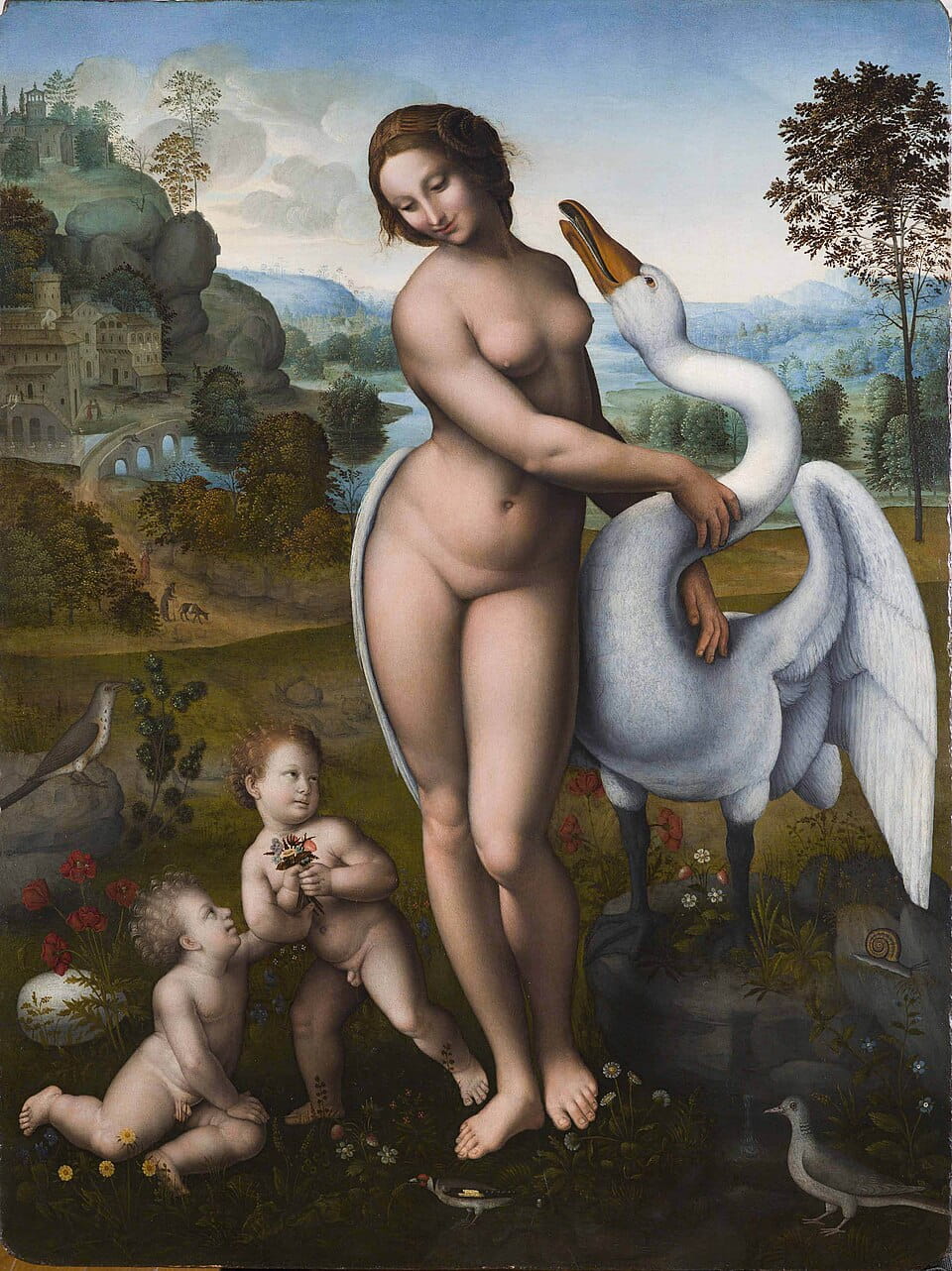
Leda and the Swan with what appears to be Castor and Pollux. Original painting by Il Sodoma
Because Pollux’s father was Zeus, he was immortal, born with divine powers, while his brother Castor was mortal with no divine status. Nonetheless the two boys would become remarkable huntsmen, with Castor being an excellent fencer and horse rider and Pollux a fierce boxer. They would go on various expeditions together and would join the Argonauts. Tragedy would strike when a conflict involving their cousins, Idas and Lynceus, caused Castor to be struck by a spear and die. Mortified and overcome with grief, his soul-sibling gone before his eyes, Pollux pleads with his father Zeus to save his brother Castor.
Shedding warm tears amid groans, he spoke aloud: “Father, son of Cronus, what release will there be from sorrows? Order me to die too, along with him, lord. A man's honor is gone when he is deprived of friends; but few mortals are trustworthy in times of toil to share the hardship.” So he spoke. And Zeus came face to face with him, and said these words: “You are my son. But Castor was begotten after your conception by the hero, your mother's husband, who came to her and sowed his mortal seed. But nevertheless I grant you your choice in this. If you wish to escape death and hated old age, and to dwell in Olympus yourself with me and with Athena and Ares of the dark spear, you can have this lot. But if you strive to save your brother, and intend to share everything equally with him, then you may breathe for half the time below the earth, and for half the time in the golden homes of heaven.” When Zeus had spoken thus, Polydeuces did not have a second thought. He opened the eye, and then released the voice of the bronze-clad warrior, Castor.
Pollux’s sacrifice shows a profound fraternal love for his brother Castor. The two souls linked together eternally in the heavens could be described as an embodiment of the human and the divine, with the mortal Castor and immortal Pollux now embraced in the stars with nothing to separate them. Pseudo-Hyginus in the Astronomica says the following:
“They say that of all brothers they were the most affectionate, not striving in rivalry for the leadership, nor acting without previous consultation.”
He also writes that as a reward for their loving friendship Zeus “is thought to have put them in the sky,” likewise Neptune also gave them horses to ride and the ability to aid shipwrecked men.
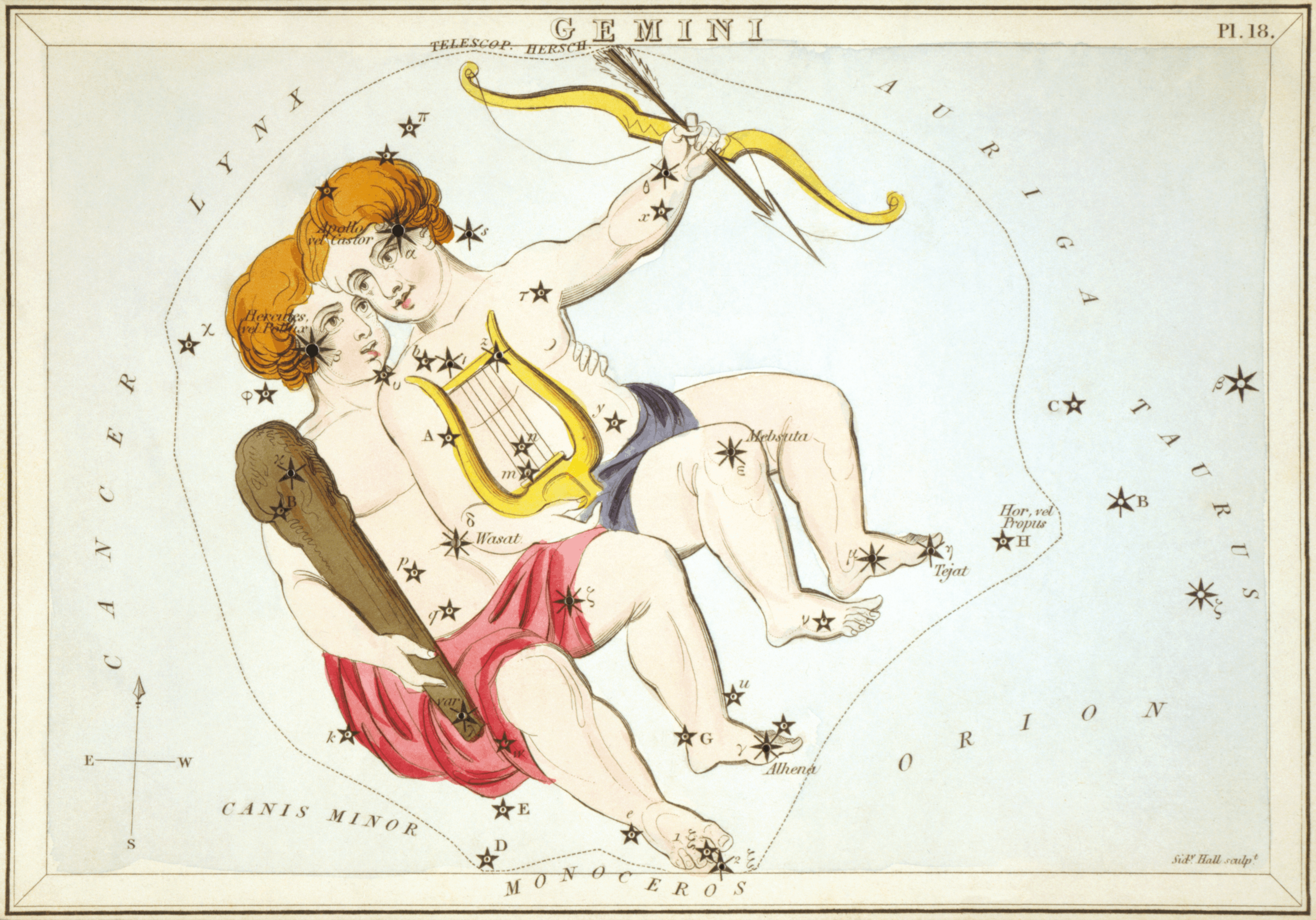
Together the twin boys are collectively known as Dioscuri which means “sons of Zeus.” The Divine Twins make up the brightest stars of the Gemini constellation. The best time to see this constellation is in the fall and winter, but keep in mind that the twins are also between Cancer and Taurus (the horns of Taurus will point to the twins).

photo courtesy of theskylive.com
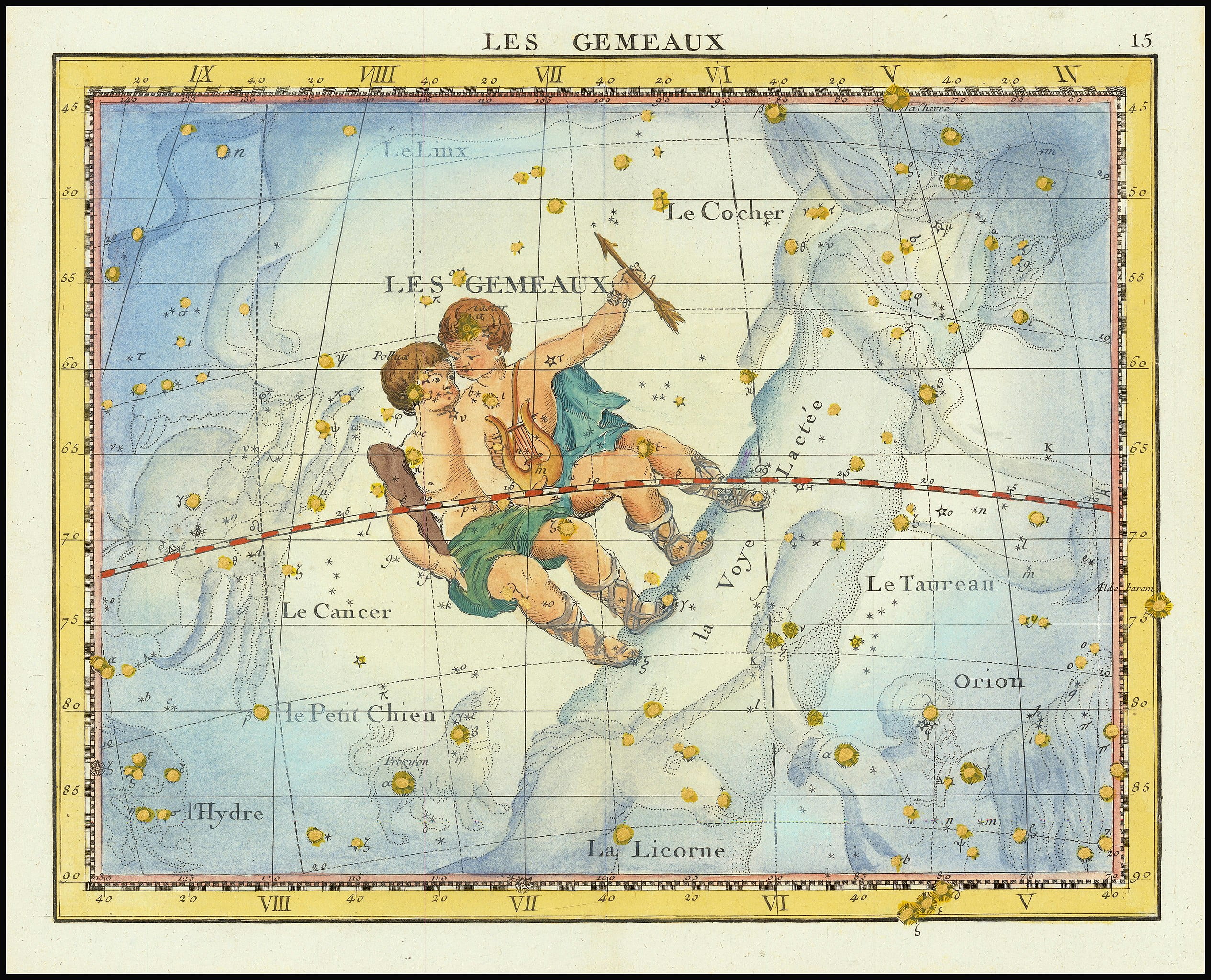
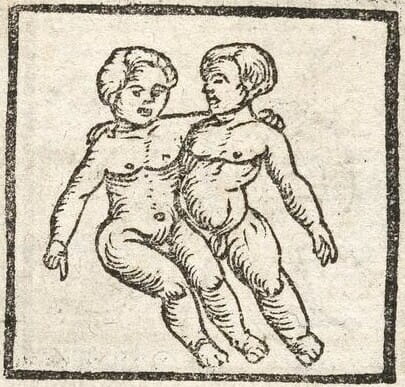
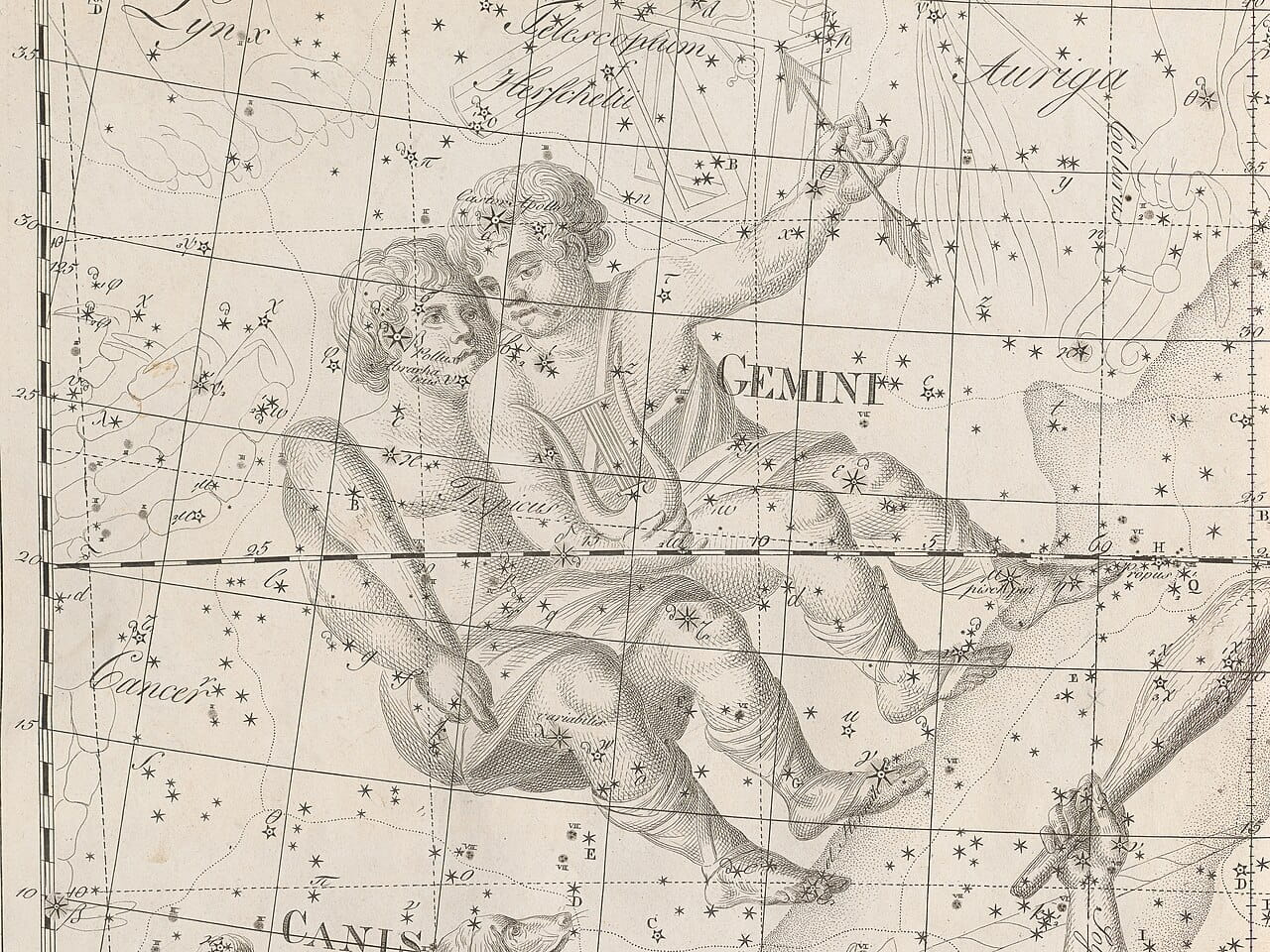
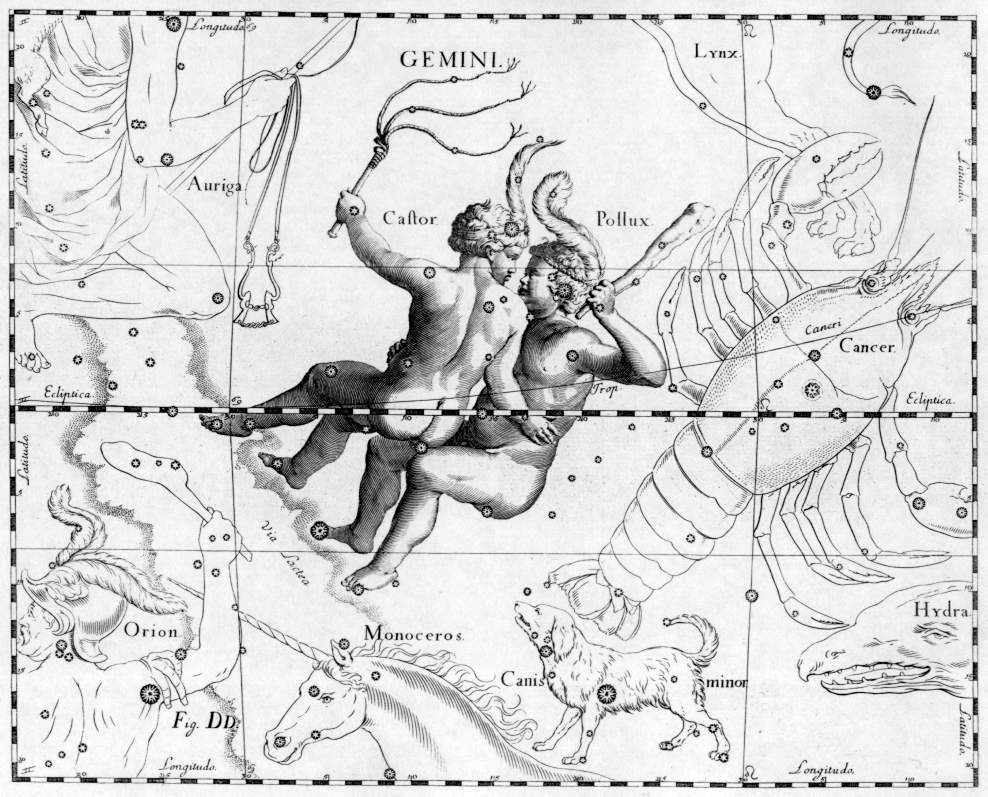
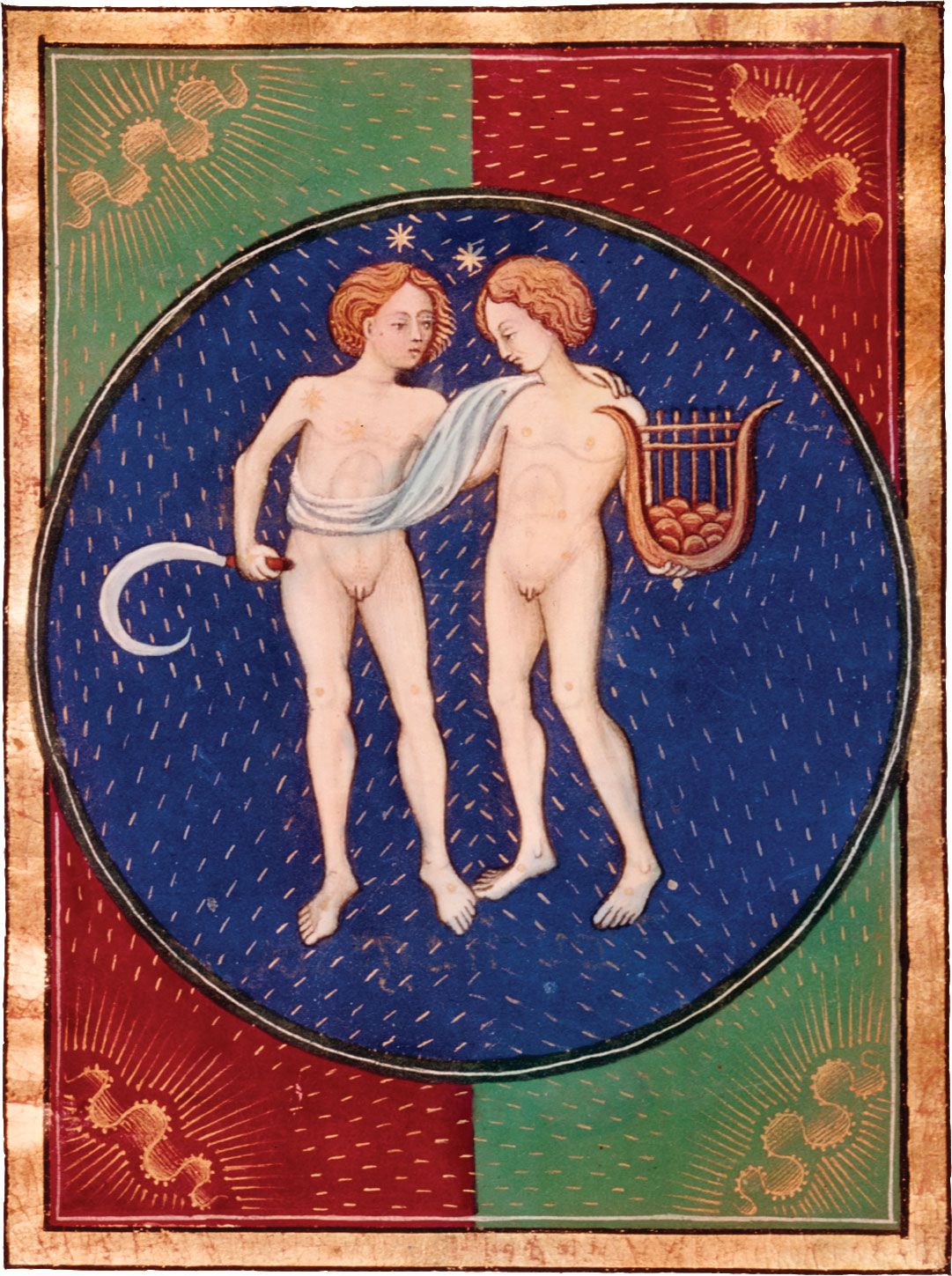
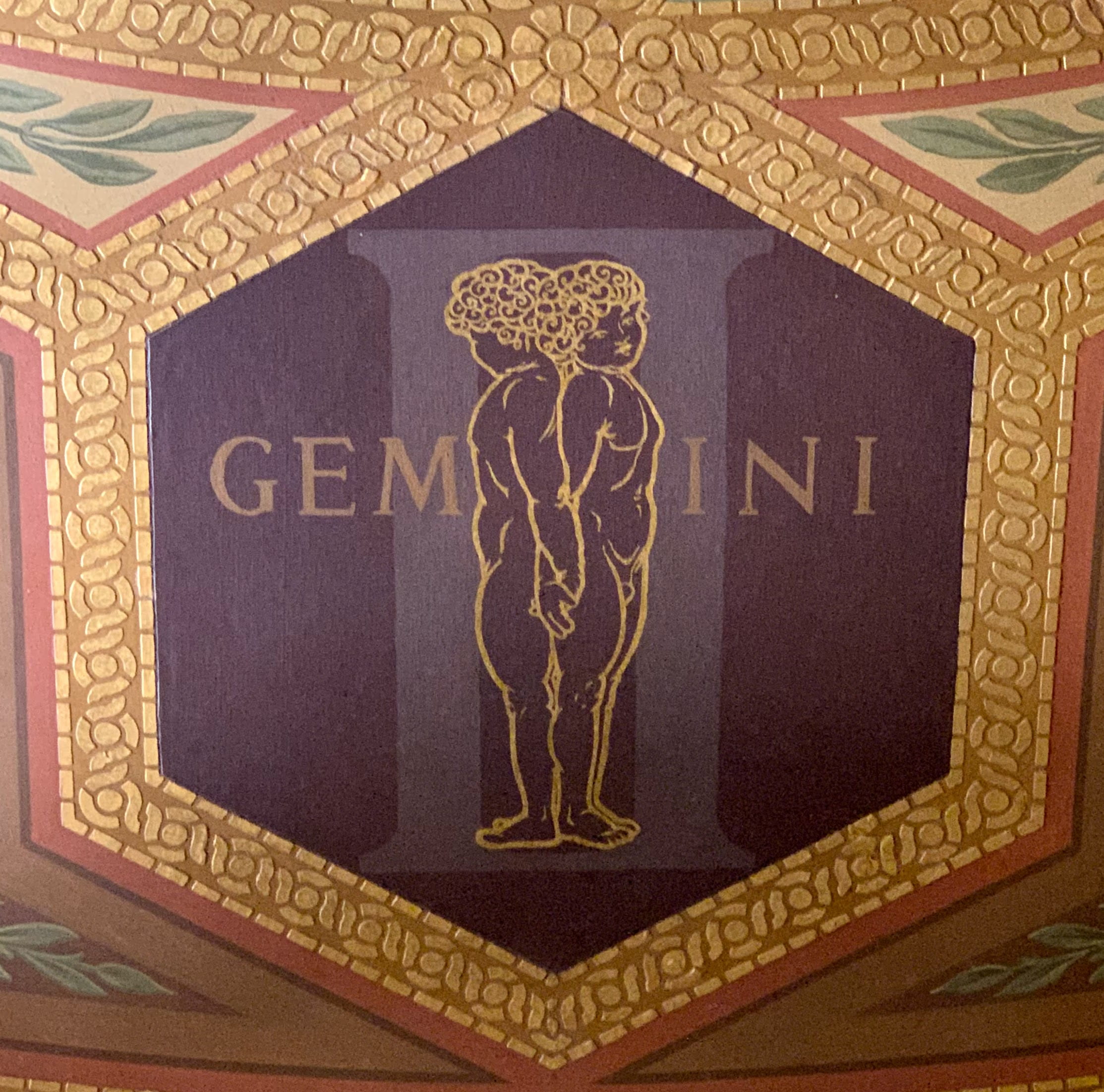
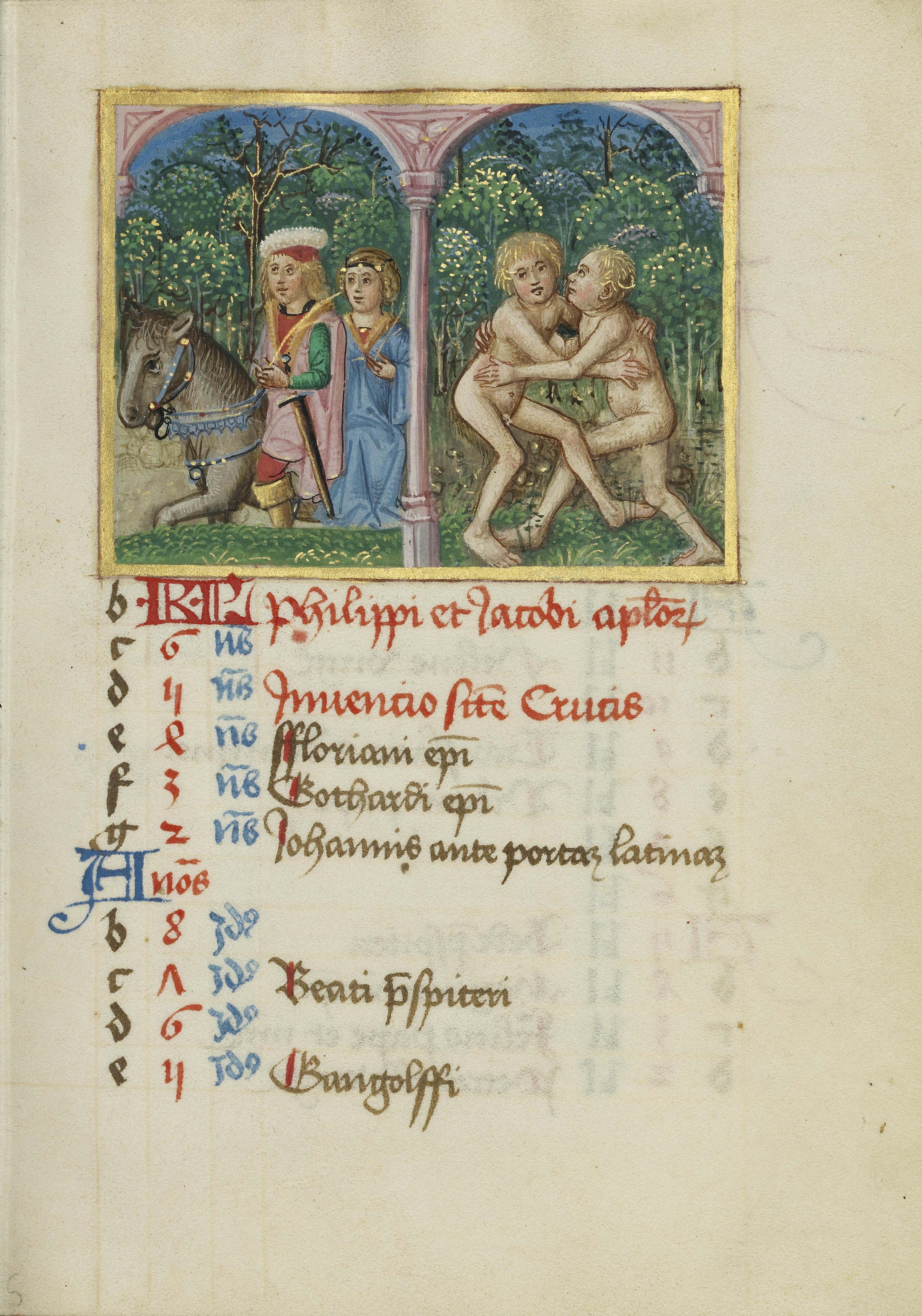
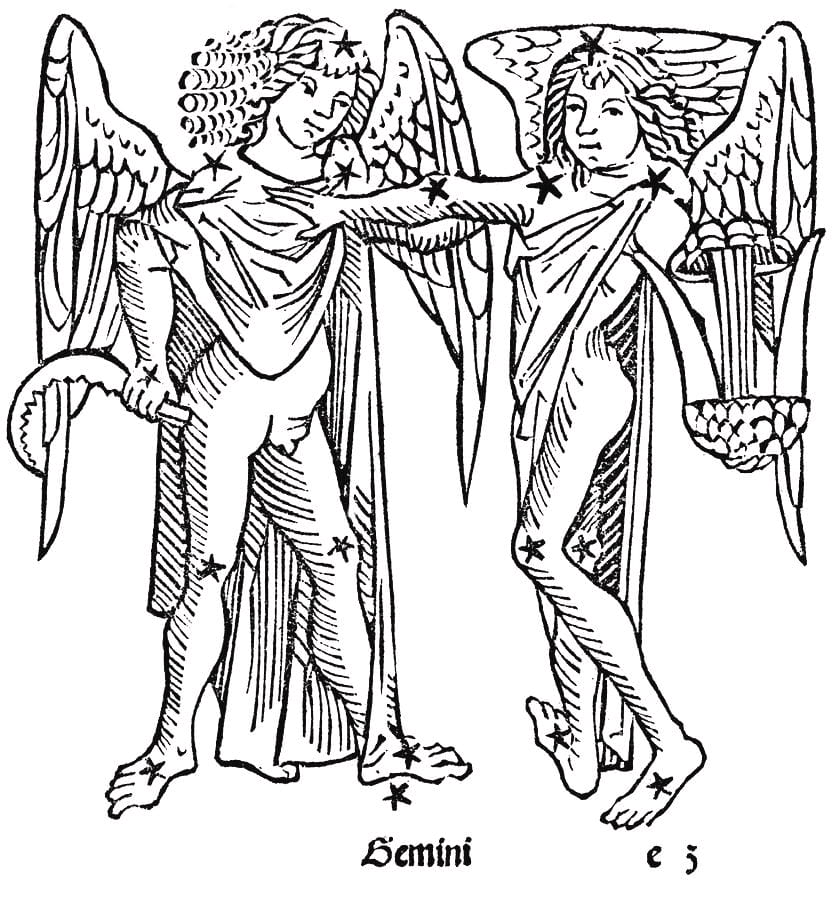
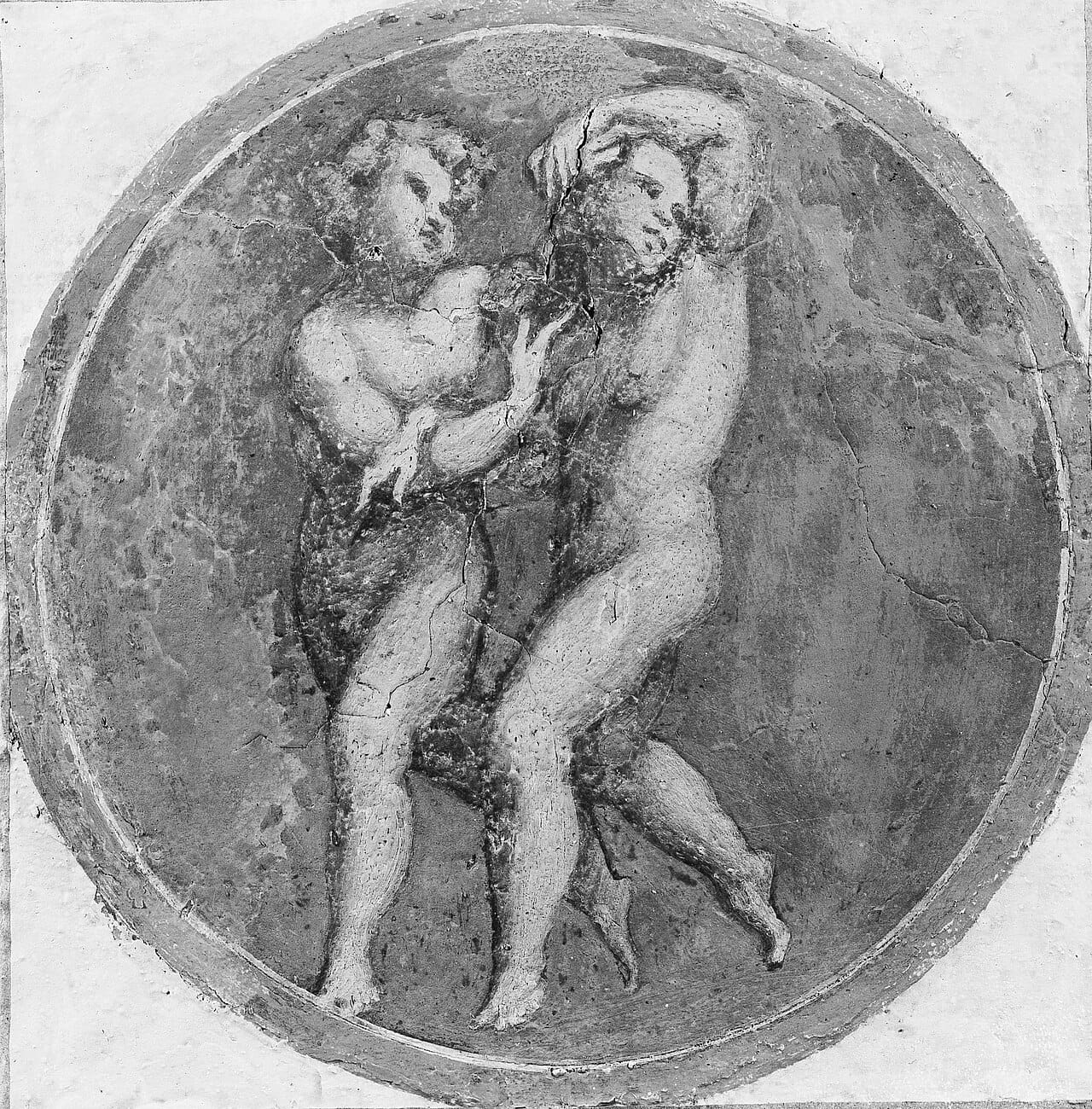
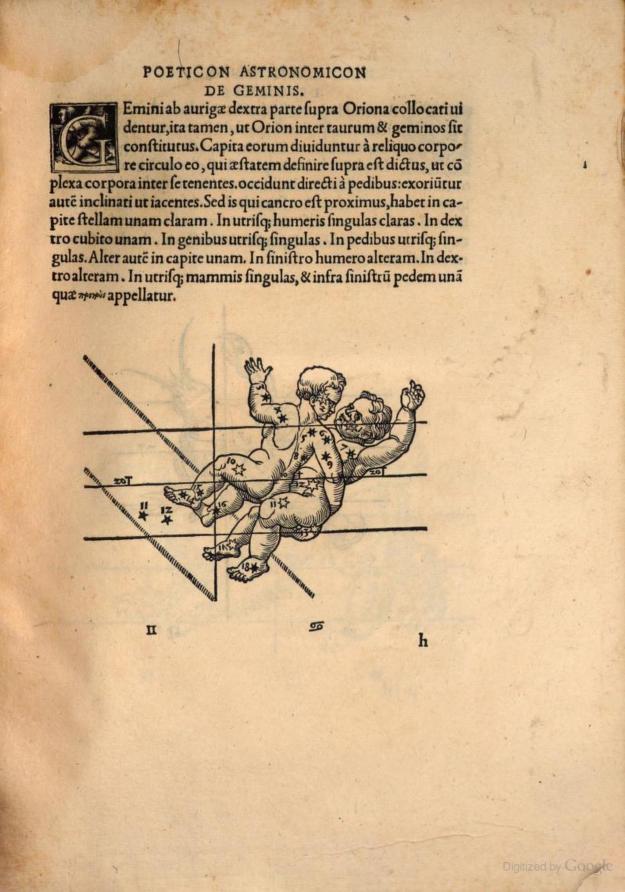
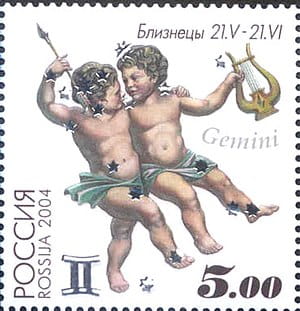
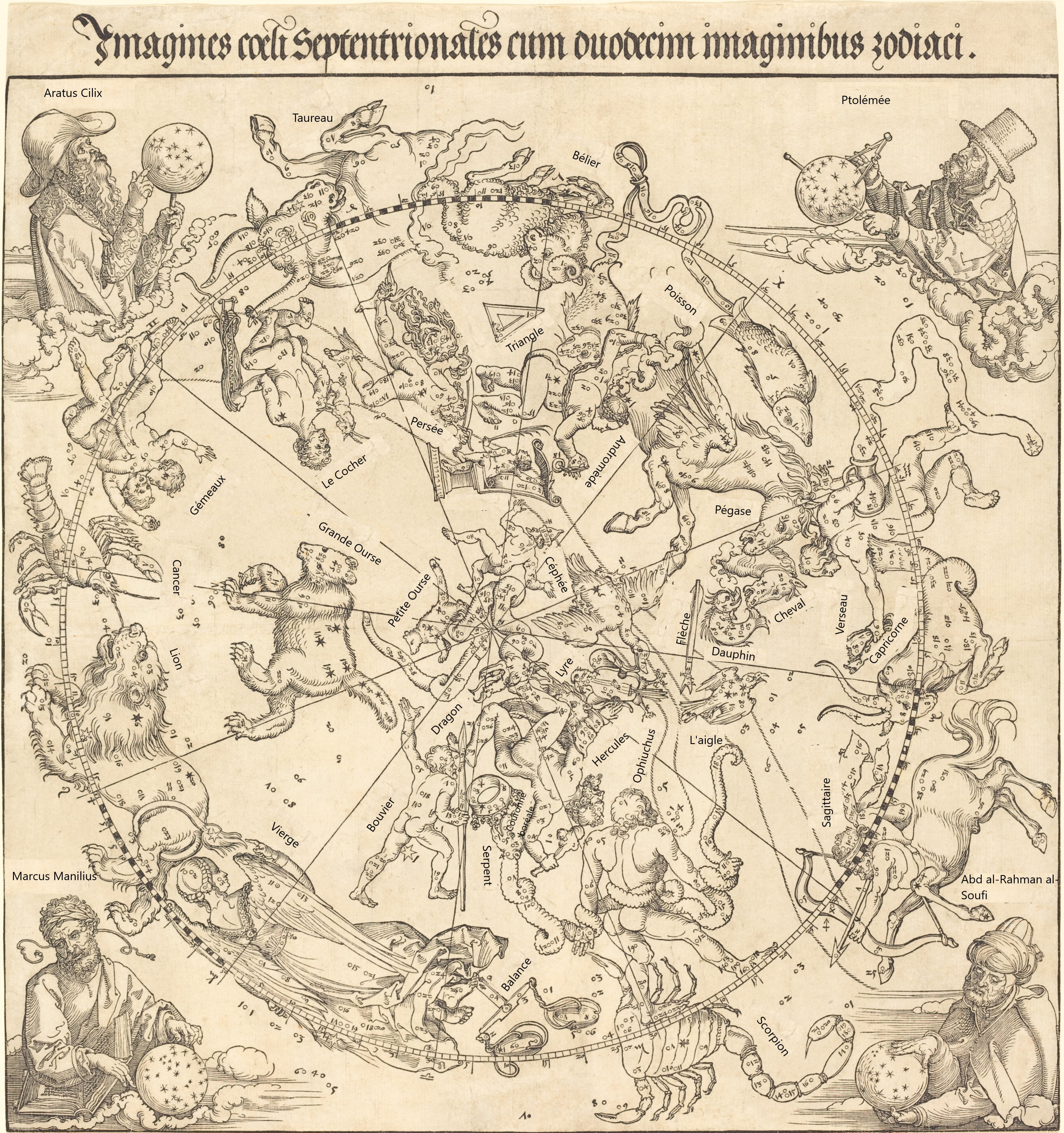
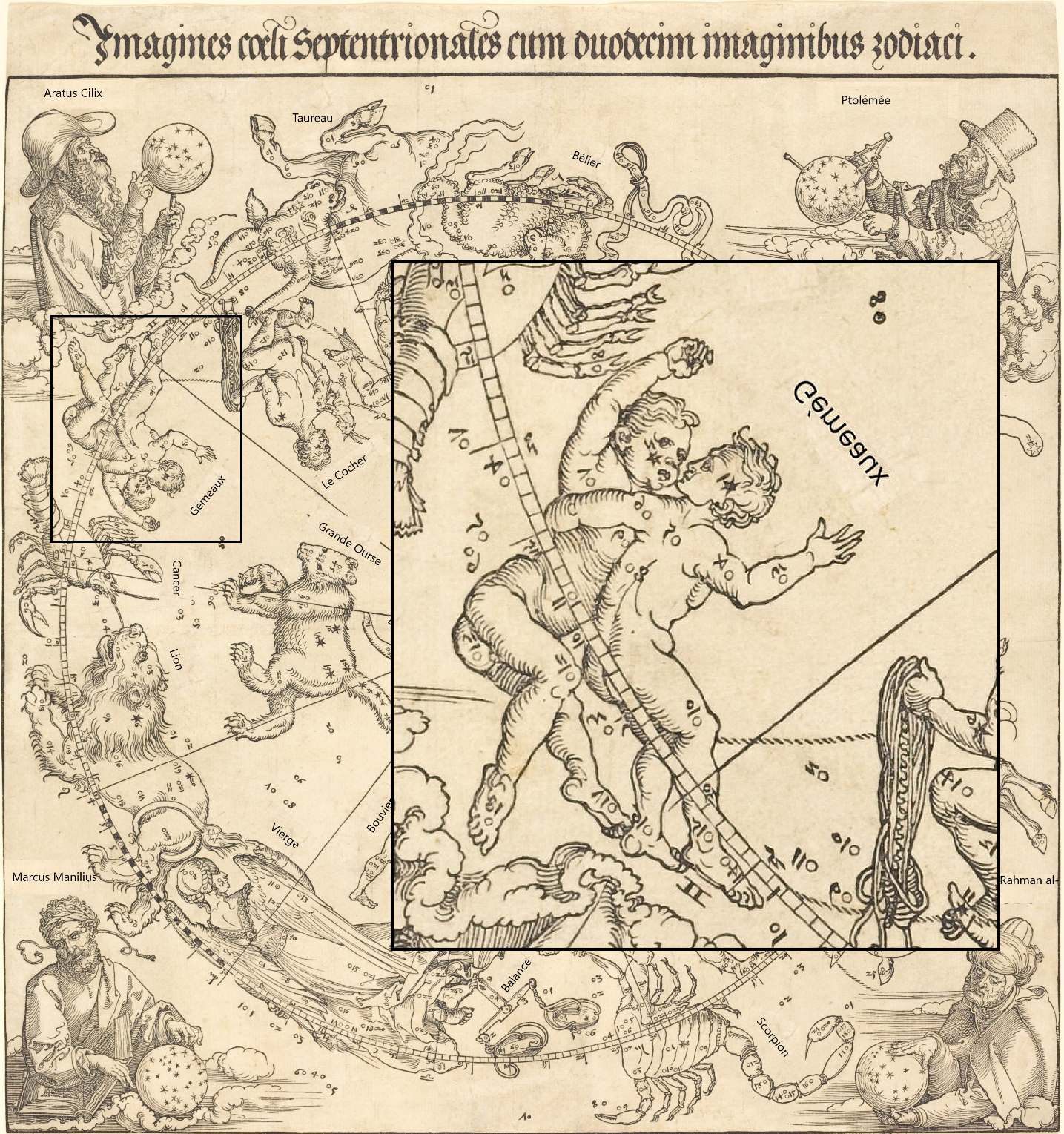
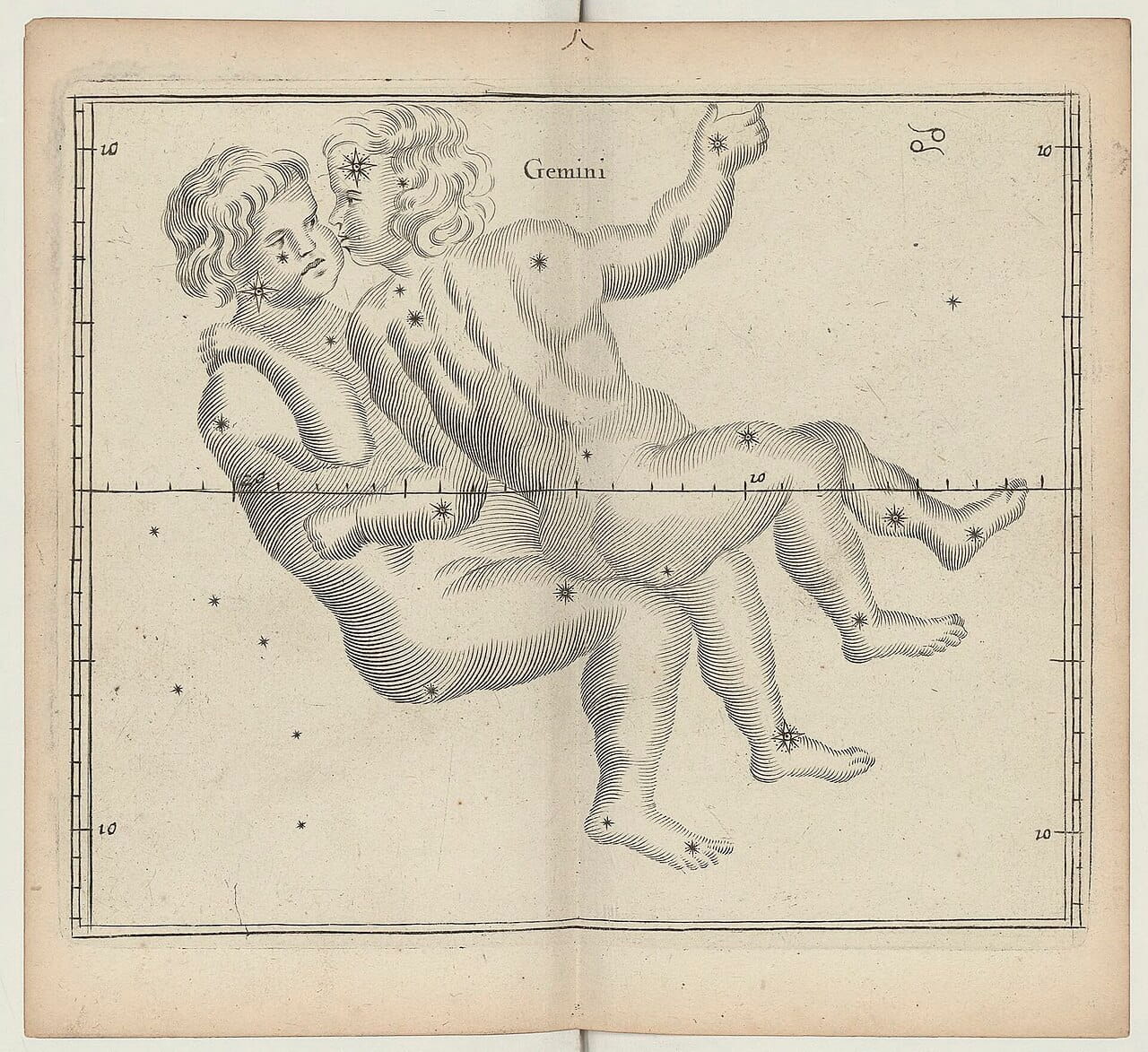
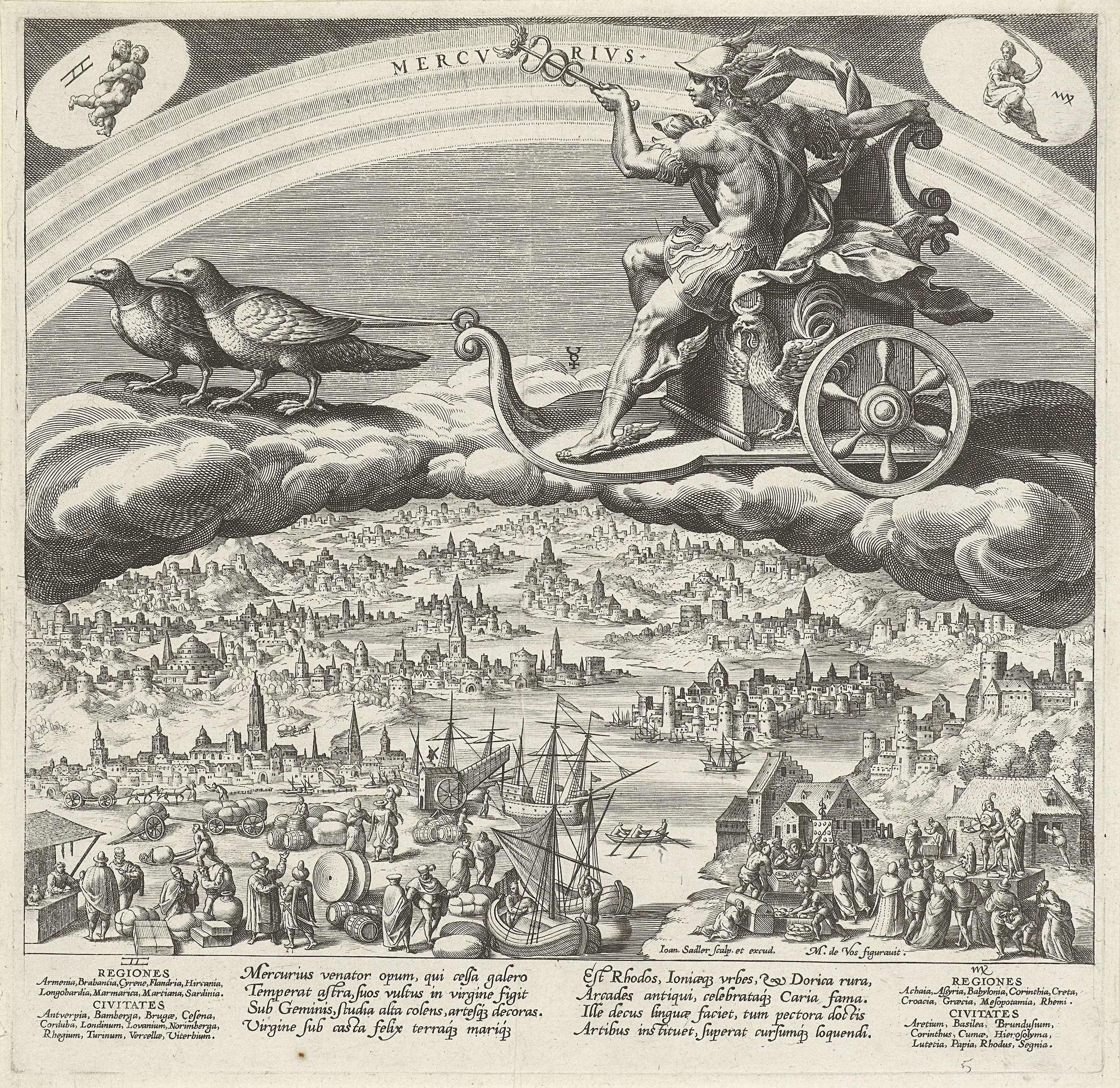
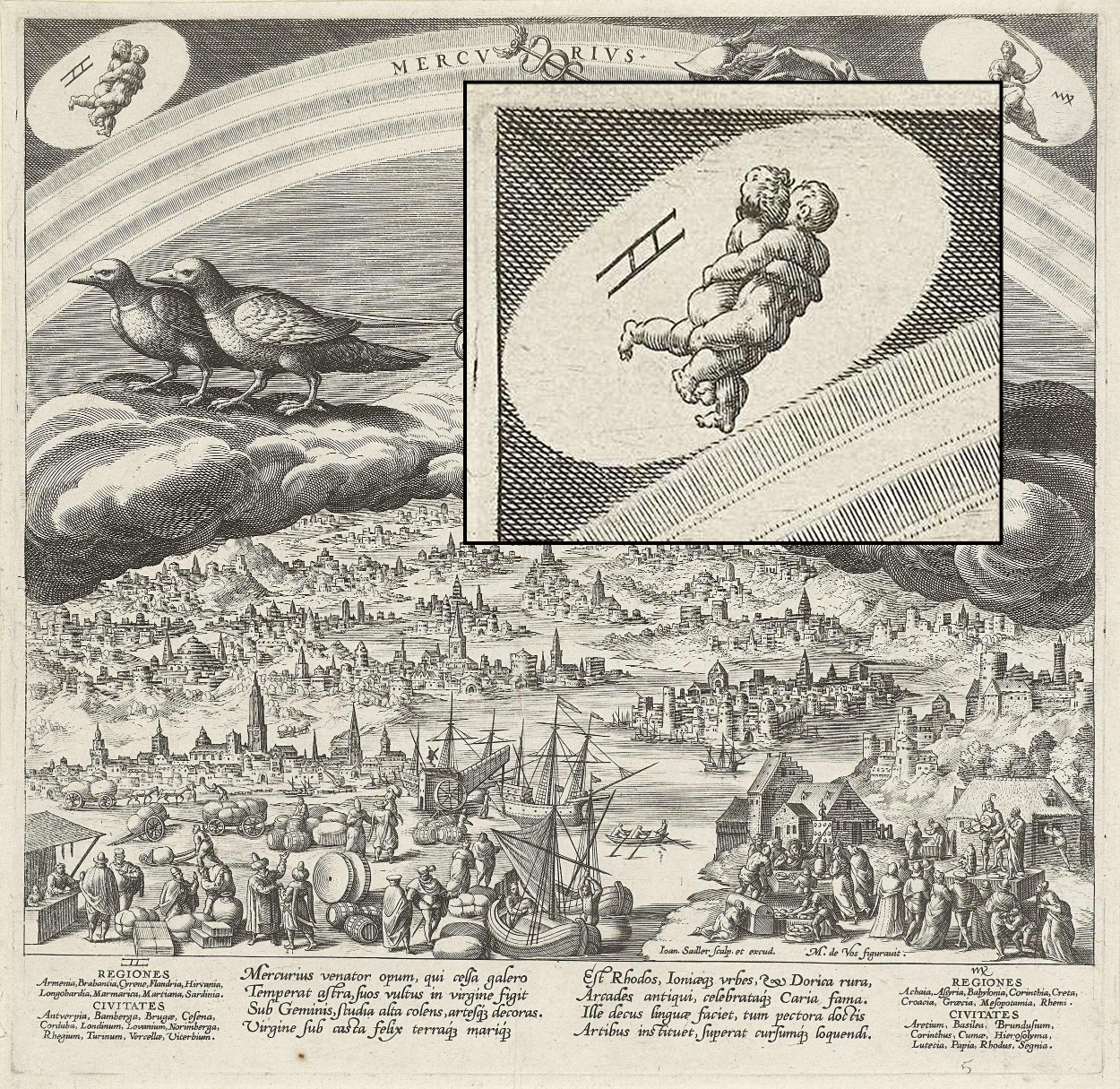
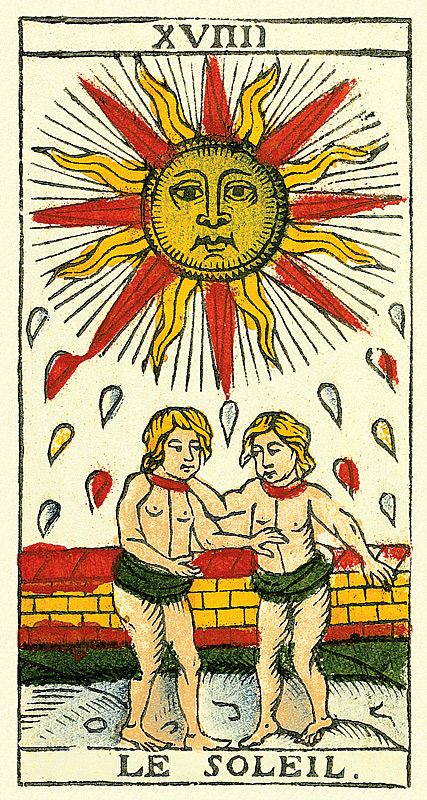
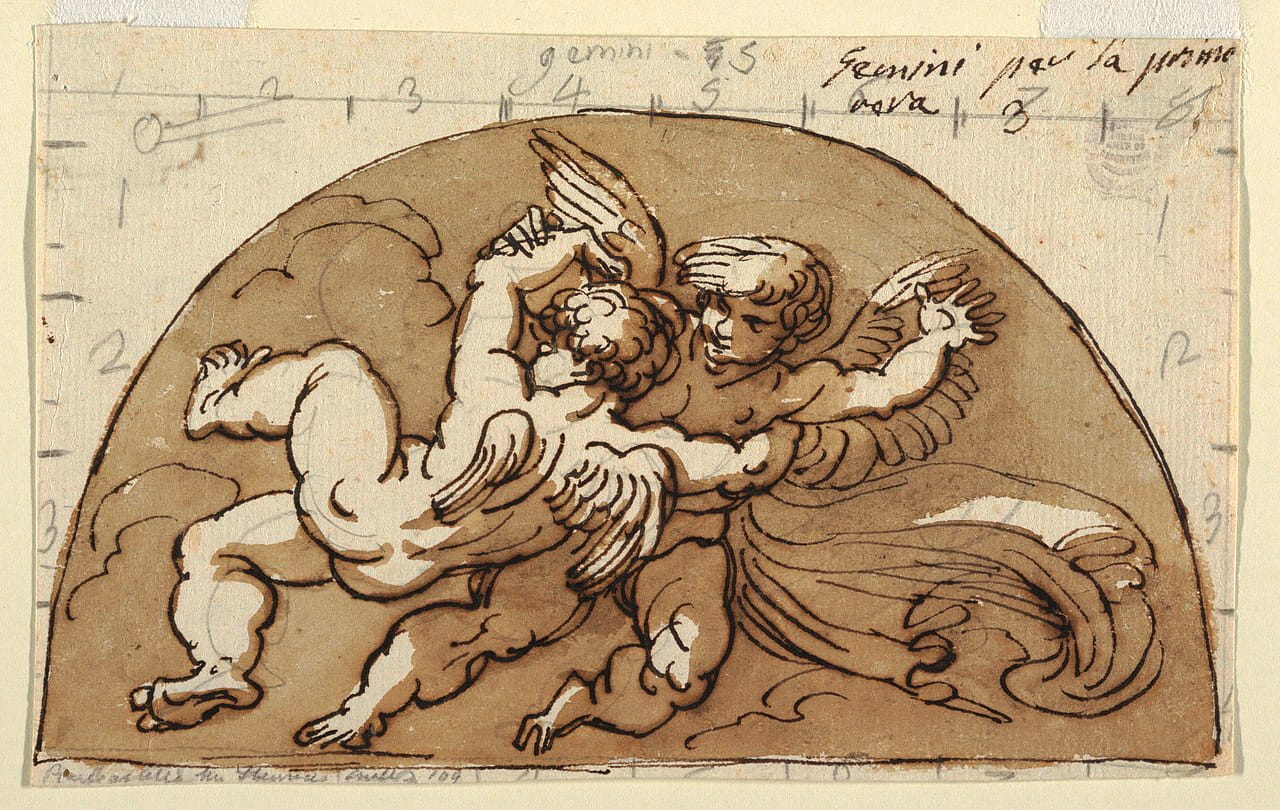
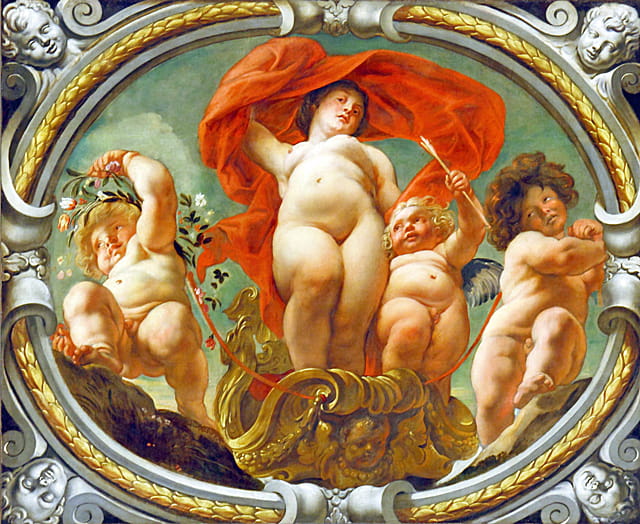
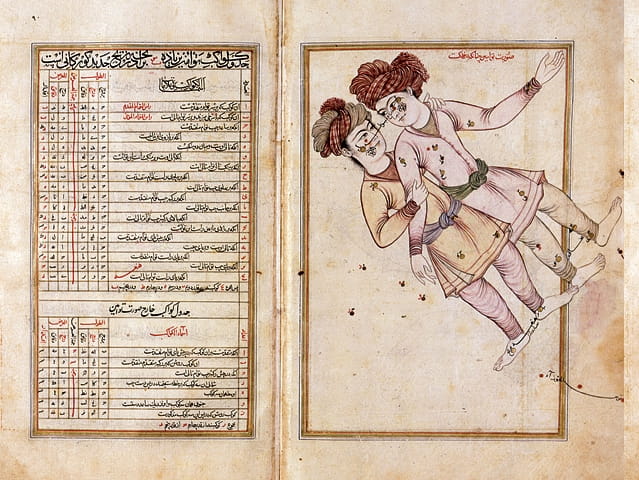
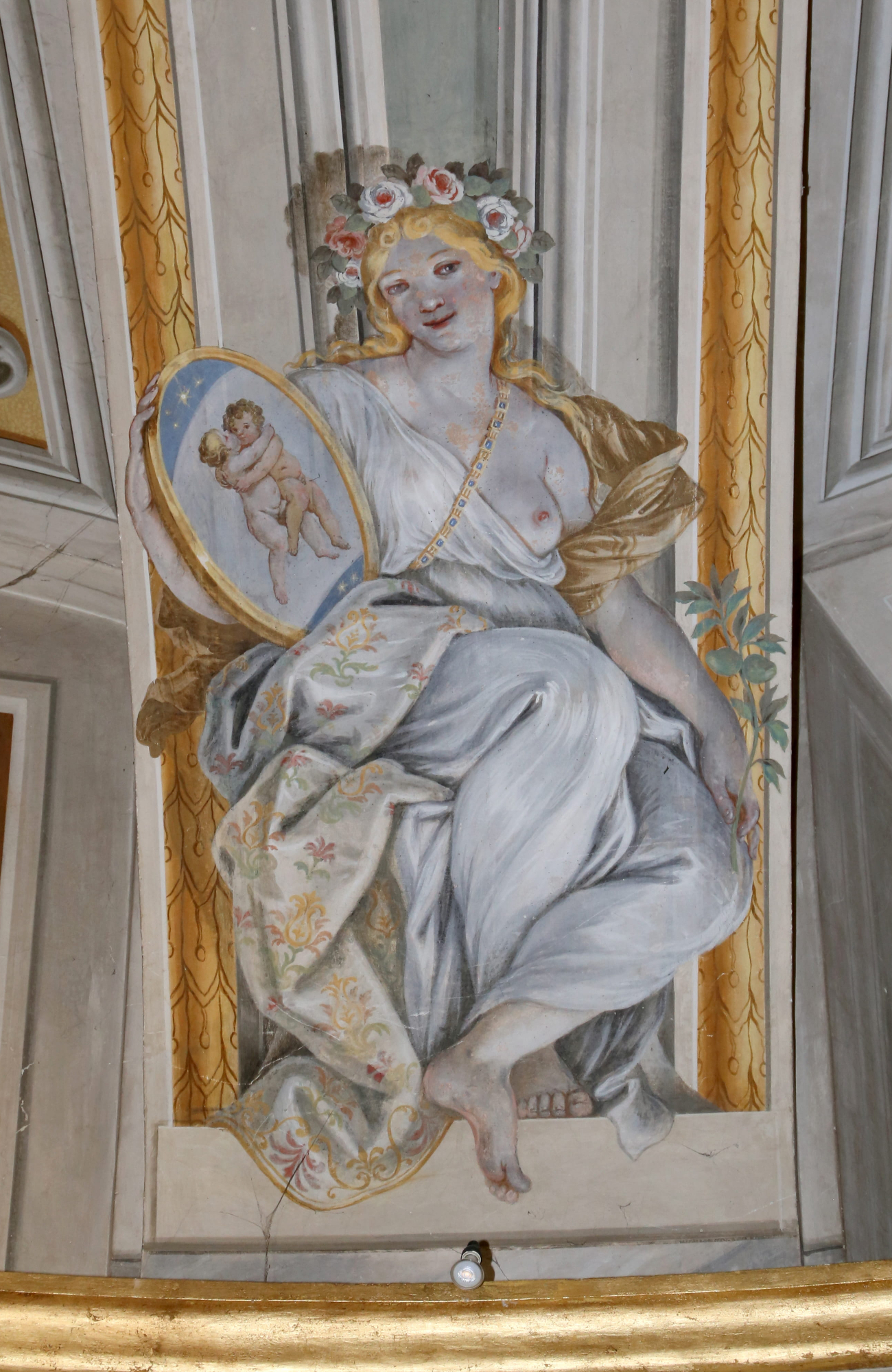
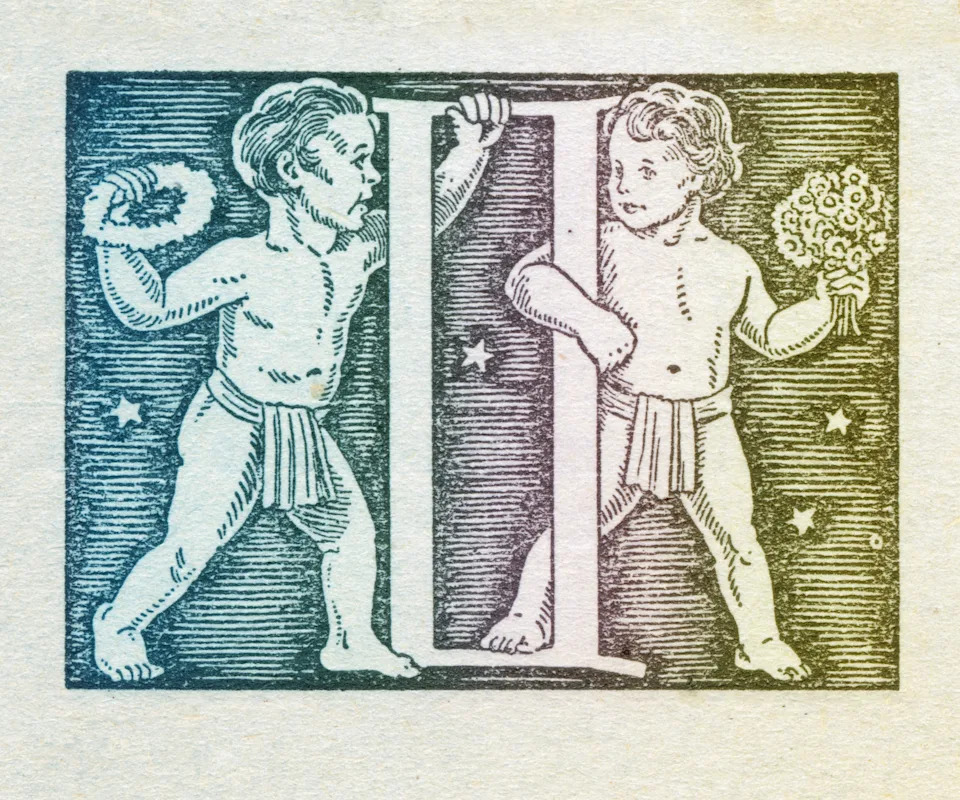
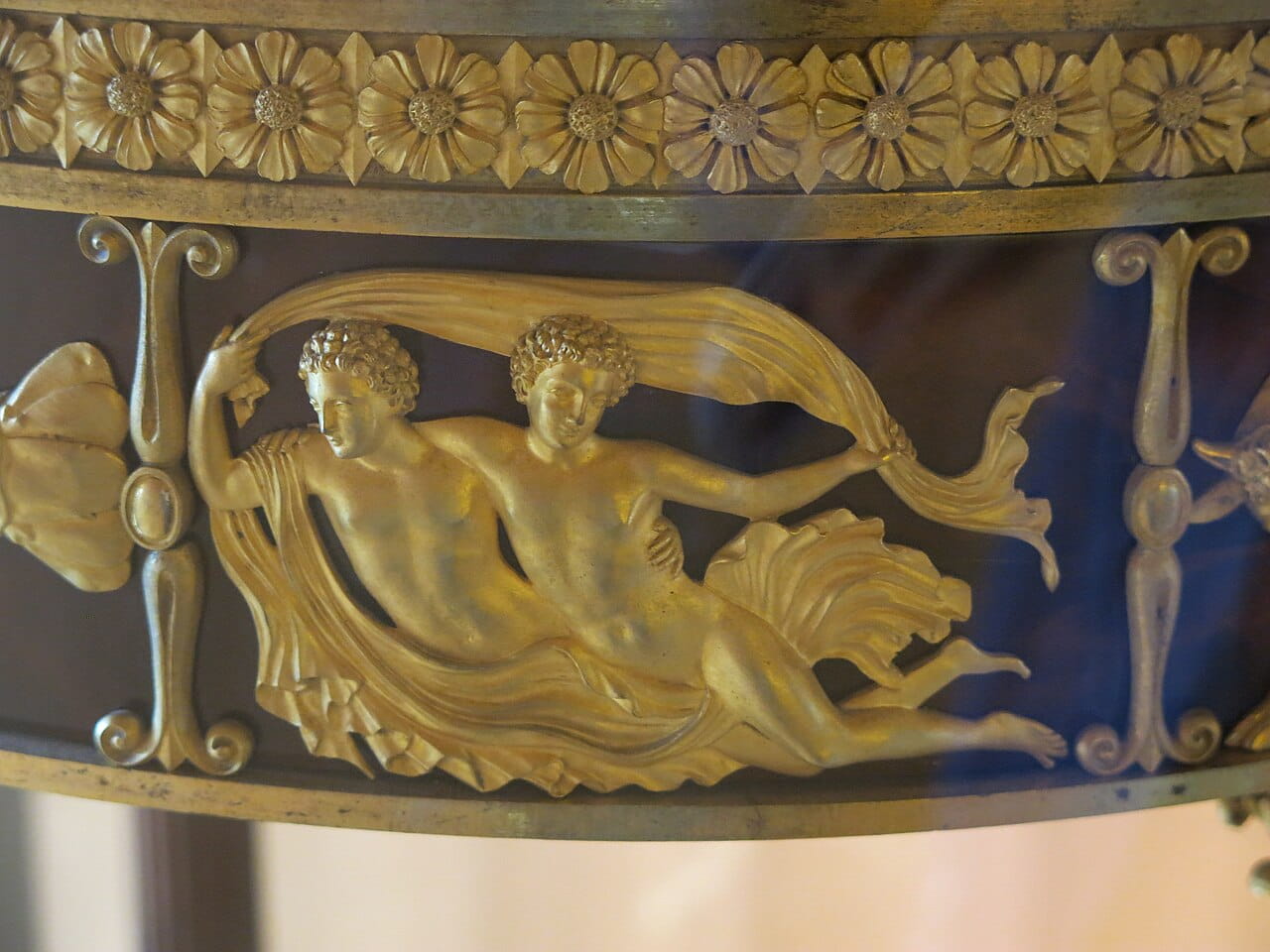
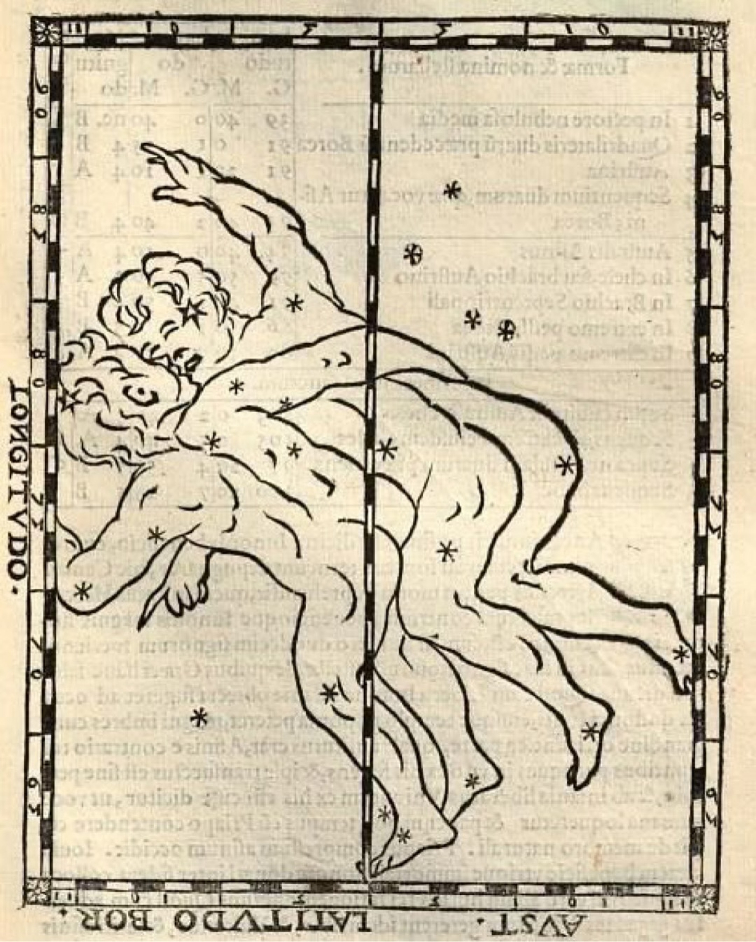
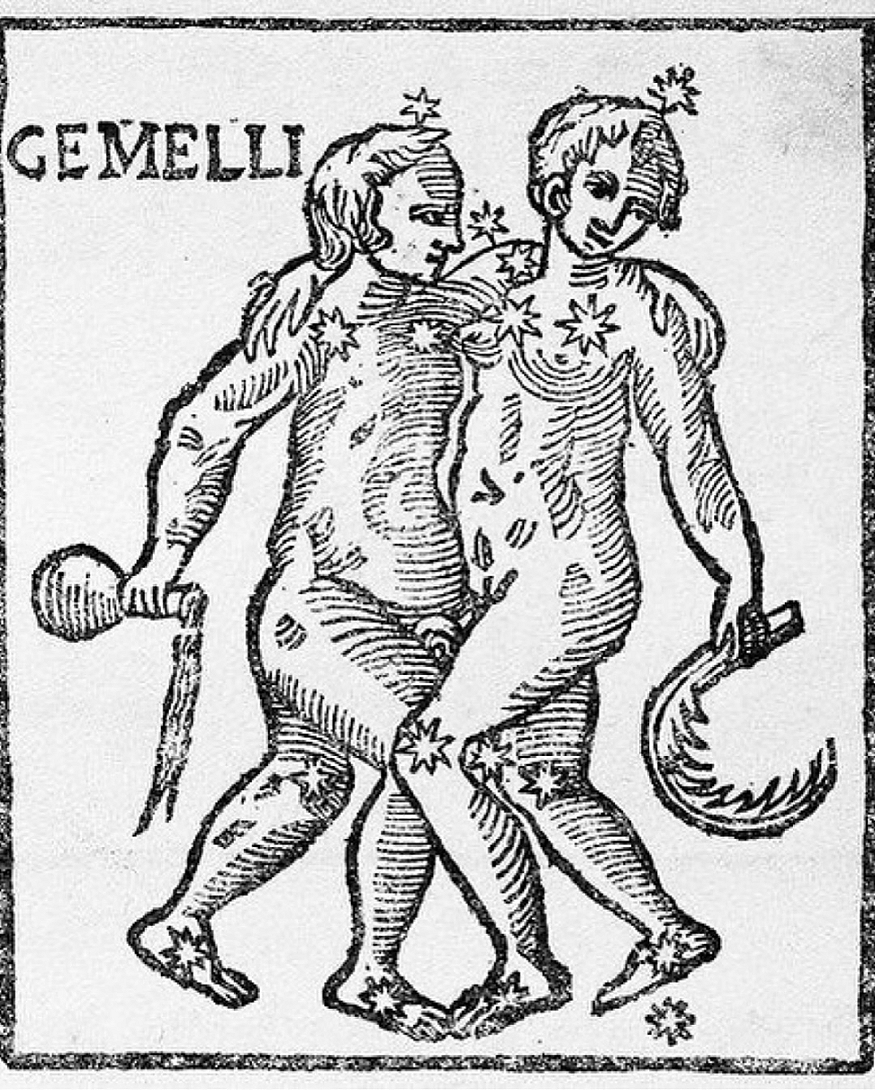
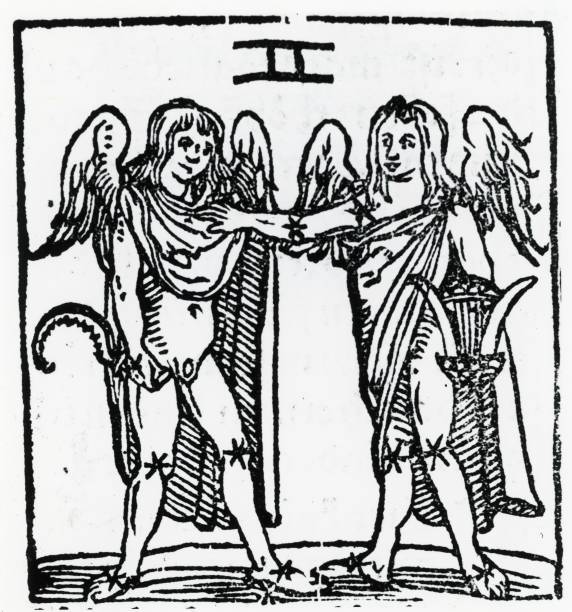
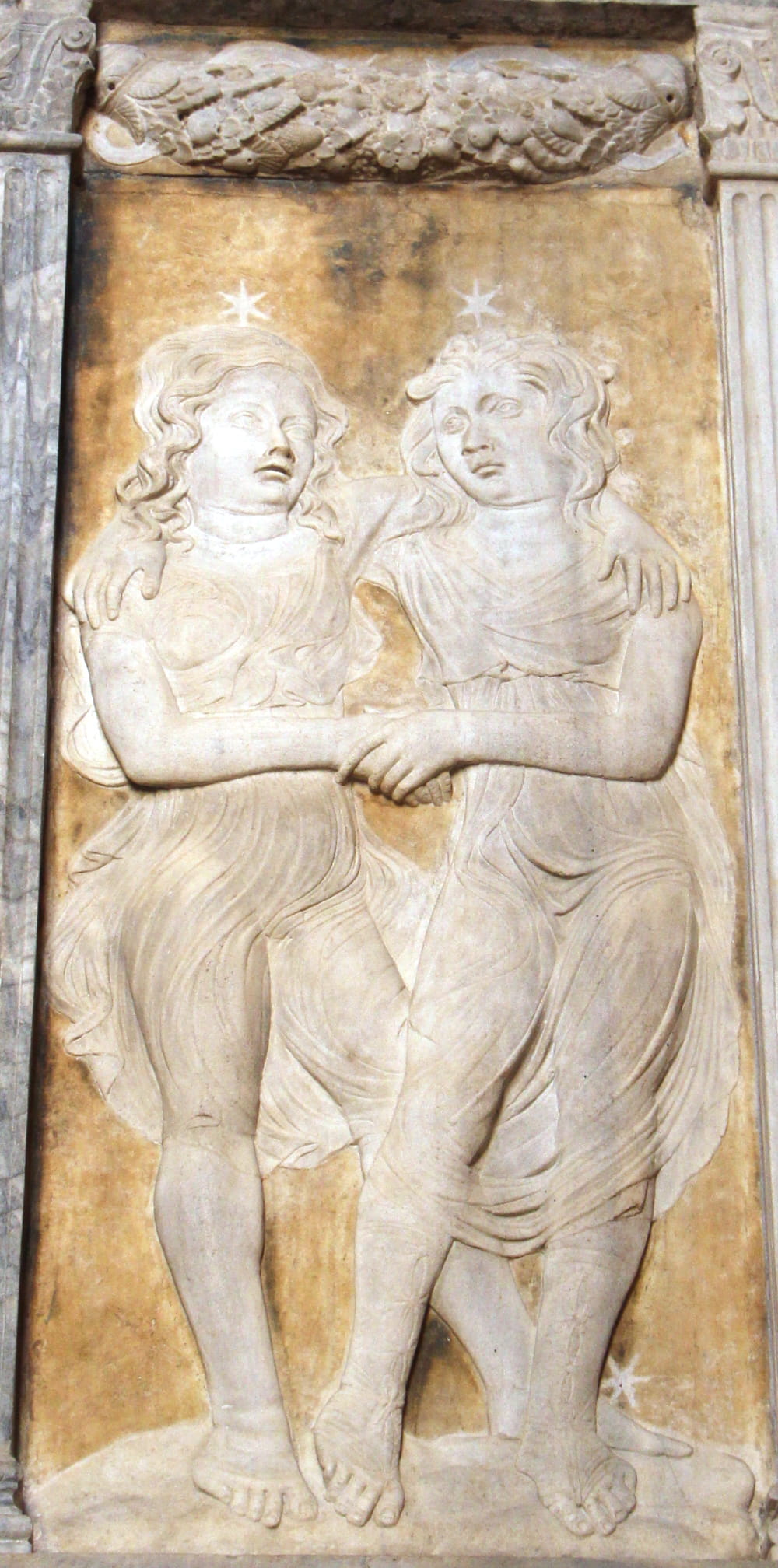
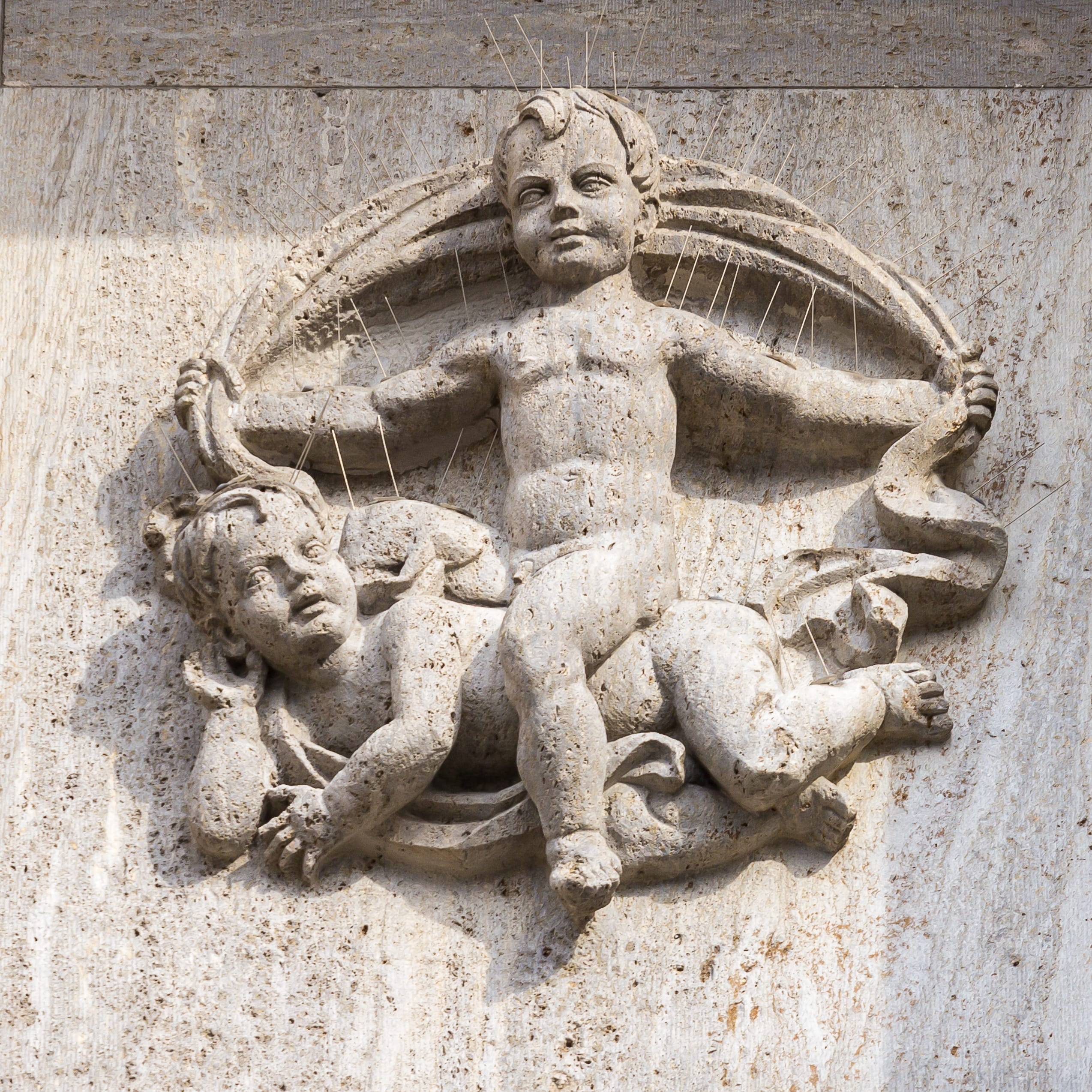
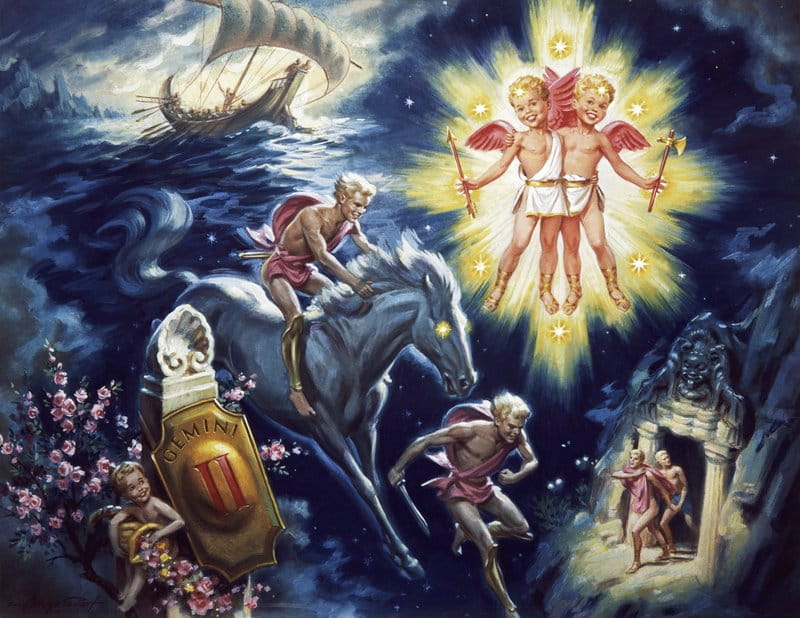
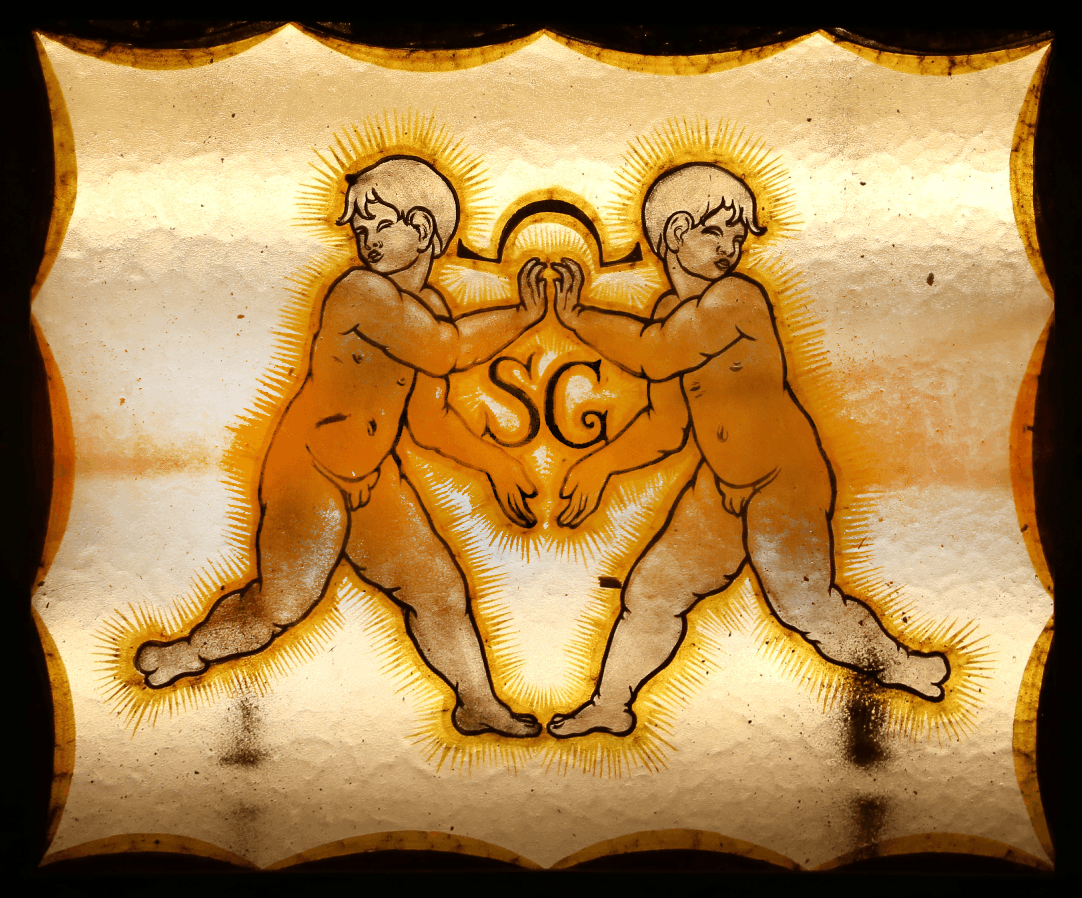
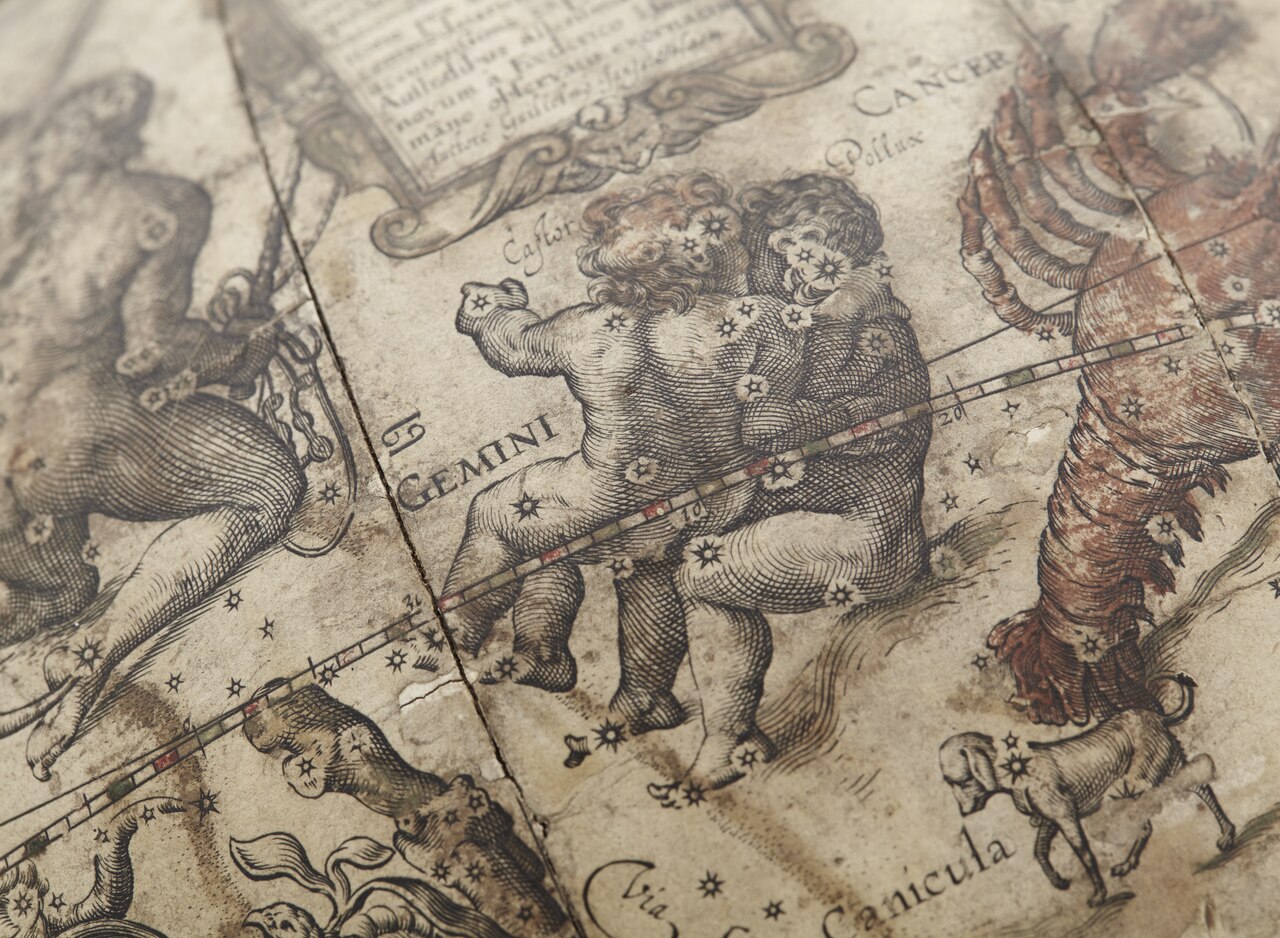
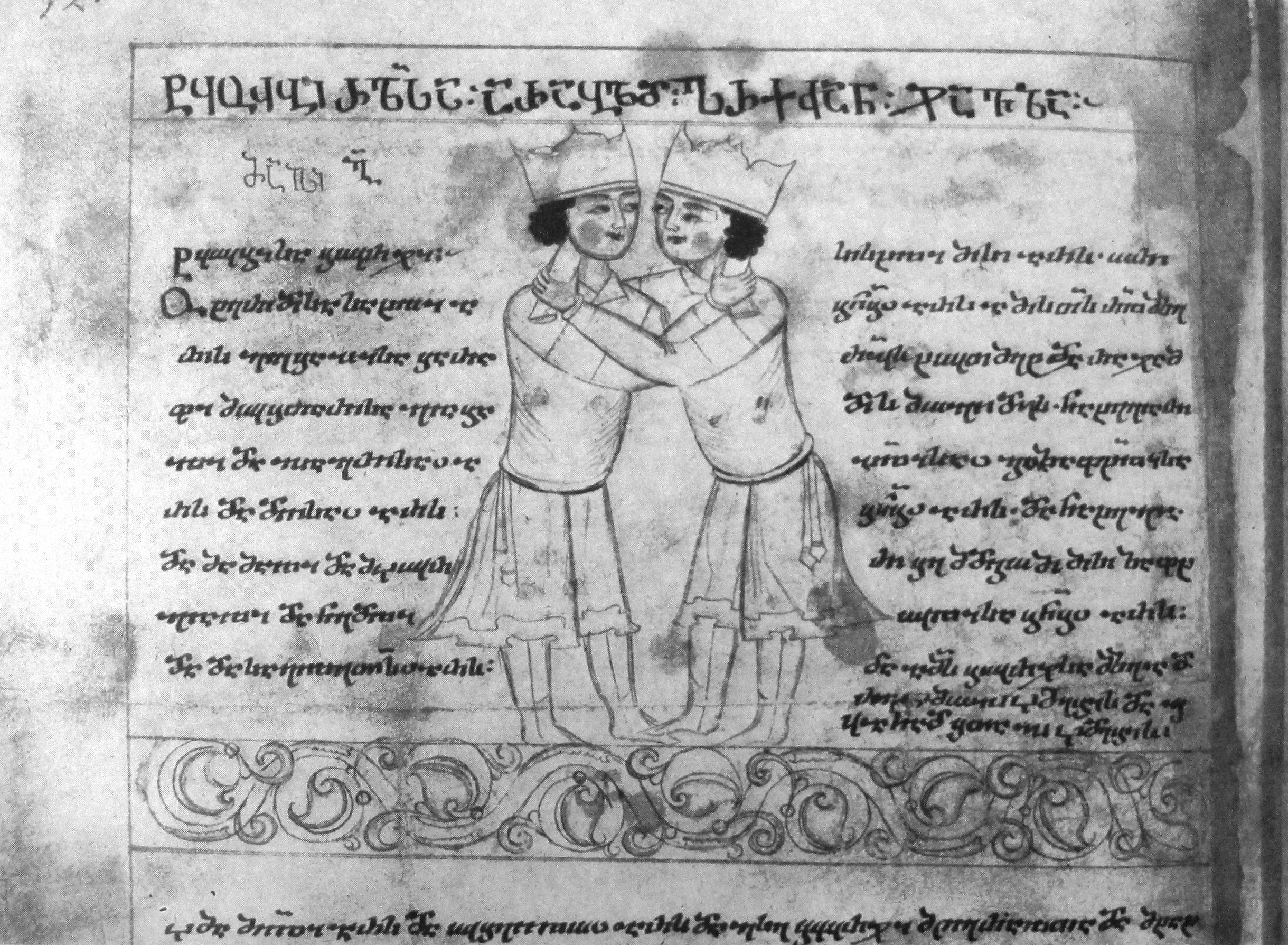
Art of Castor and Pollux varies depending on what the theme or subject matter is. It should also be noted that art of Castor and Pollux can be found not just in Greek art, but in Christian manuscripts, Persian art, tarot cards, statues, and various other regions. The Gemini constellation has taken on different forms and names throughout diverse cultures and passages of time. In Arabian astrology the twins take on the form of peacocks, while in Egypt they twins are depicted as goats known as Horus the Elder and Horus the Younger.
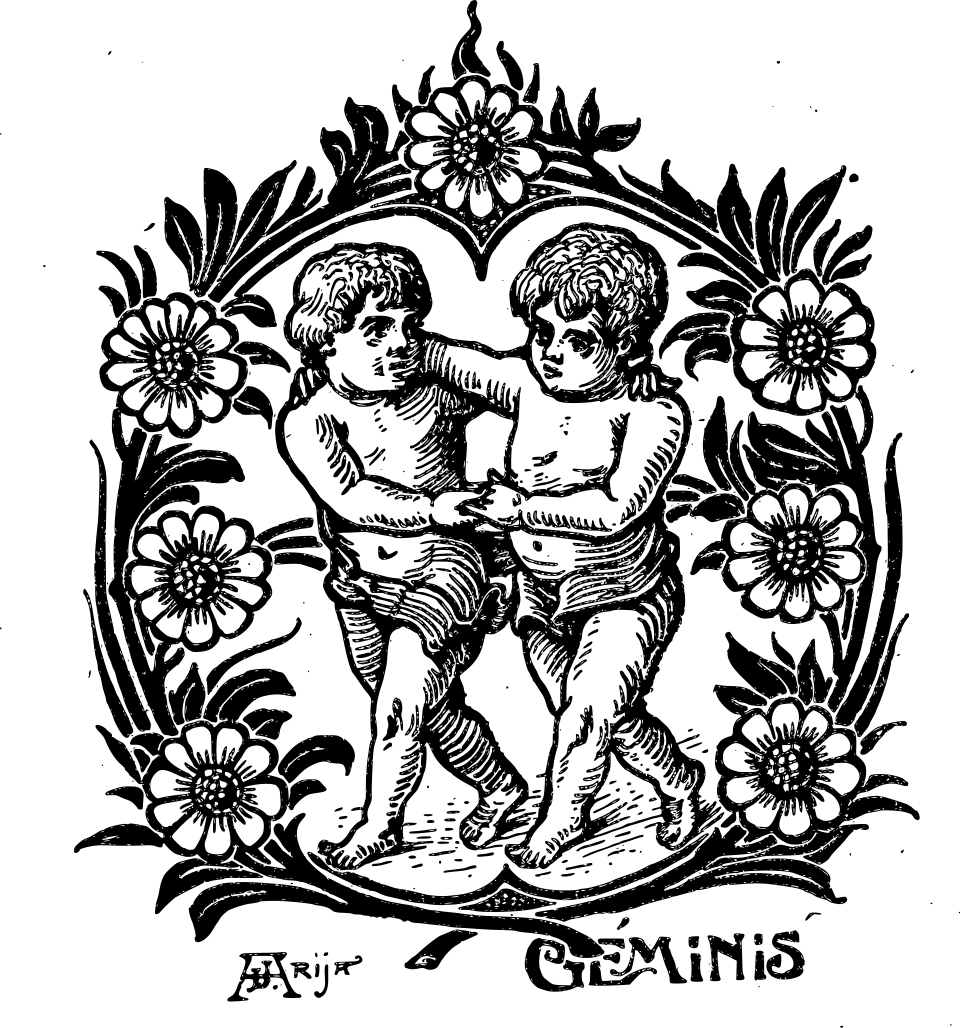
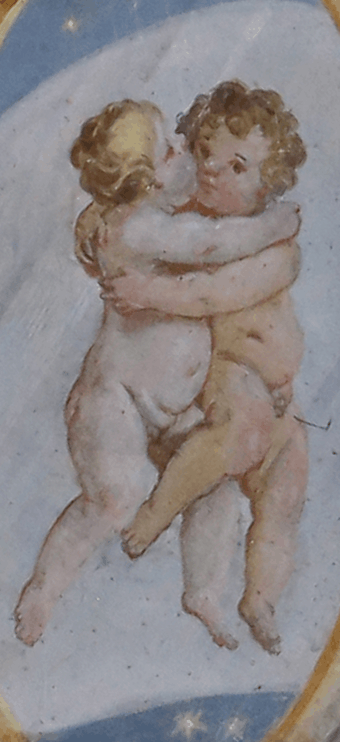
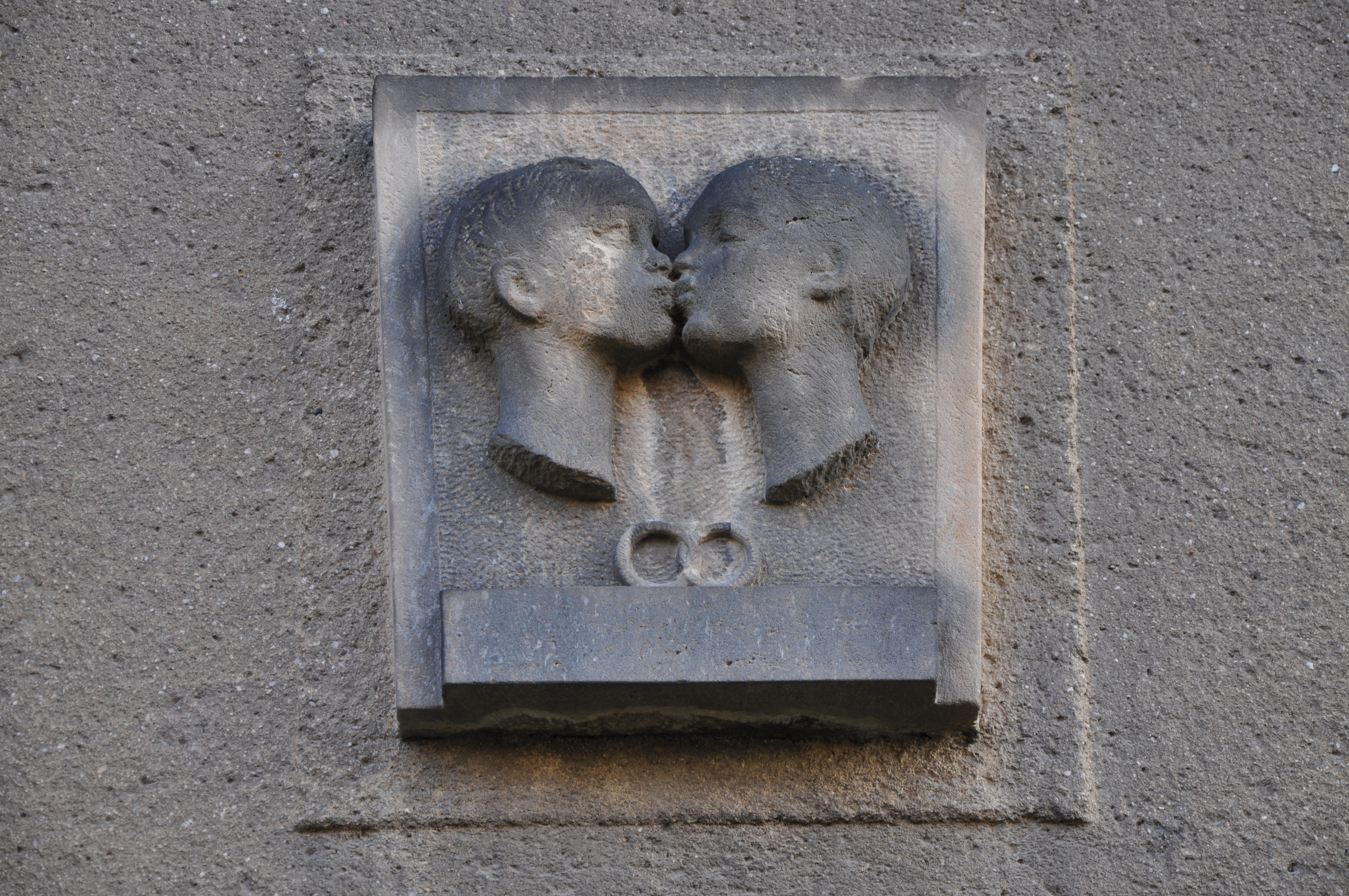
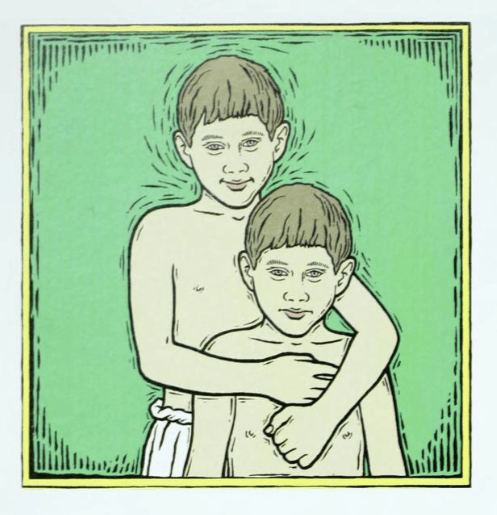
In the case of the Gemini constellation, the two brothers are usually young or pre-adolescent boys in the heavens, embracing and holding each other, intertwining and caressing each other’s naked bodies. Some art will occasionally have them share a kiss on the lips. Whether this tender gesture is a simple demonstration of their brotherly love or serves as a metaphor for the meeting between the temporal and the divine remains to be known. What we can infer, however, both from their actions and from the words of the poets, was that their affection for each other was true and noble. A love so deep and intimate that one can only find such a bond in the stars.
Sources: